CGTN’s Mike Walter and Peter Alegi, Professor of history and global soccer studies at Michigan State University, discuss the legacy of Diego Maradona, both on and off the football pitch.
“In other words, South Africans’ simple desire to enjoy a football match in the context of apartheid’s inhumanity fuelled a quasi-religious obsession for the game that assisted the broader struggle for political and cultural liberation.” – @futbolprof
https://t.co/yy106mI8BQ— Njabulo Ngidi (@NJABULON) August 1, 2020
This week I had the pleasure of speaking with Njabulo Ngidi, Sports Editor at New Frame, about the return of professional soccer in South Africa under COVID-19. “The beautiful game could give the depressed country some reprieve and an escape,” Ngidi says.
Read the full article here.
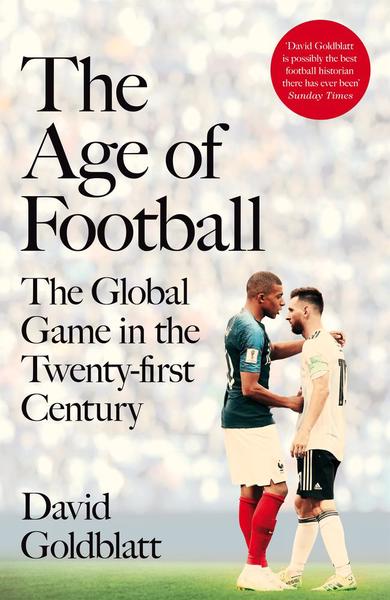
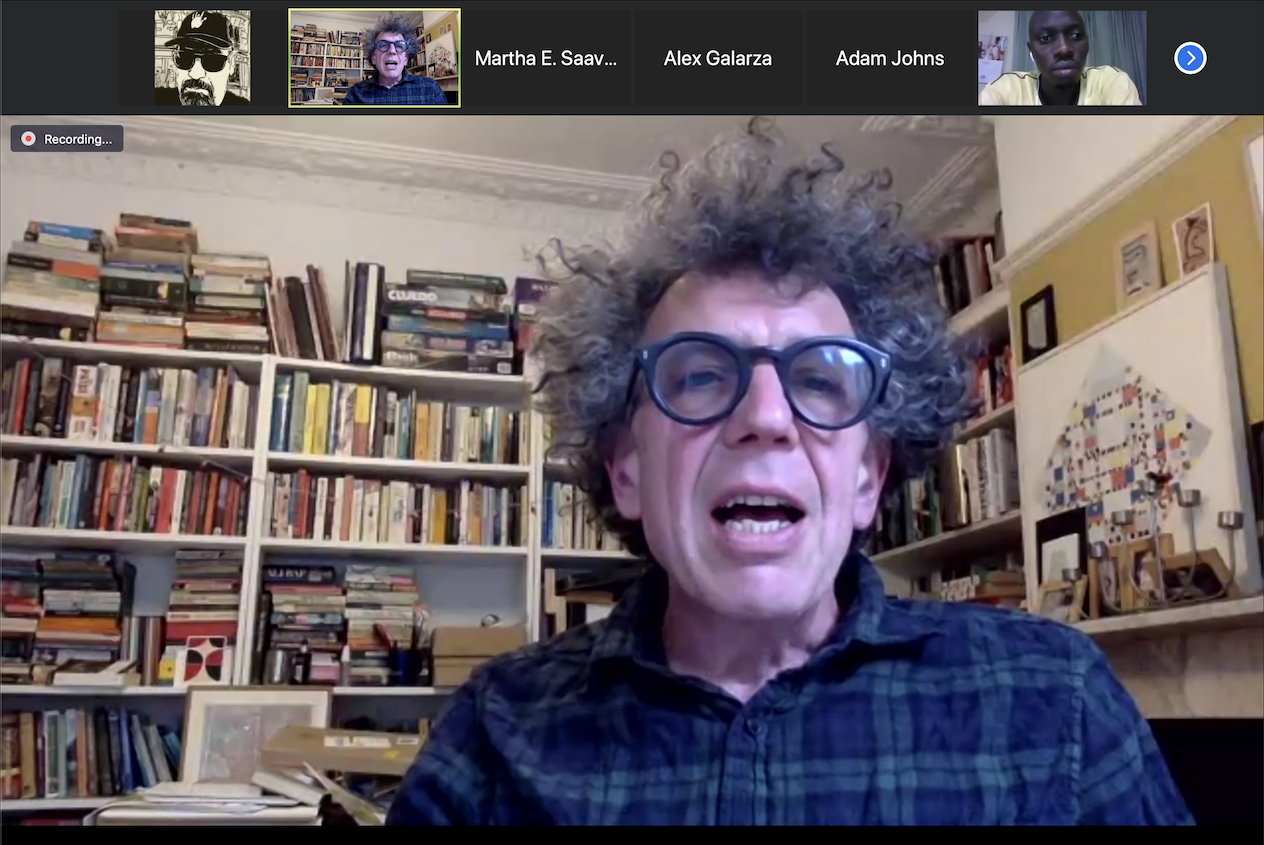
With Euros 2020 postponed until 2021 due to the COVID-19 pandemic, the Football Scholars Forum organized a five-part summer series with academic, journalist, and broadcaster David Goldblatt on his new book, The Age of Football: The Global Game in the Twenty-first Century [UK edition here / US edition here].
A longtime FSF member, Goldblatt is the award-winning author of several football books, including the highly acclaimed The Ball is Round: A Global History of Football, which FSF discussed here and here.
A record-setting 56 participants from five continents registered for the series. Each Tuesday 90-minute Zoom session focused on a different chapter (or chapters) in the 551-page book. Discussants opened each intellectual pick up game with a number of comments and questions. Given the book’s length and depth, this approach broke the conversation down into more digestible chunks and made it easier for individuals to contribute on topics of particular interest or expertise.
As the convenor of the series, I served as the first discussant on June 9 in the session on Africa. Danyel Reiche and Alex Galarza collaborated the following week on the Middle East and South America; then on June 23 Lindsay Krasnoff led on the 119-page chapter on Europe (read her comments here); on June 30 Andrew Guest was the discussant for the chapters on East Asia and North America/Central America/Caribbean; finally, on July 14, Simon Rofe and Matthew Pauly spearheaded the fifth and final session devoted to FIFA, Russia, and the 2018 World Cup.
“It’s the hardest book I’ve ever written,” Goldblatt revealed. “A combination of Brexit and COVID kind of ate its public reception alive. That was quite hard to process,” he said. “This [series] has been a fabulous corrective to that. It means a lot to have you read it, to know that it held your attention, entertained you and maybe enlightened you along the way.”
David Goldblatt’s extraordinary endurance, encyclopedic mind, grace and humor, com bined with the vital and sustained contributions of discussants and dozens of participants, made this series a truly extraordinary experience.
Listen to the audio recordings of each session below (personal/educational use only).
My article “Beyond Master Narratives: Local Sources and Global Perspectives on Sport, Apartheid, and Liberation” has just been published in The International Journal of the History of Sport (2020).
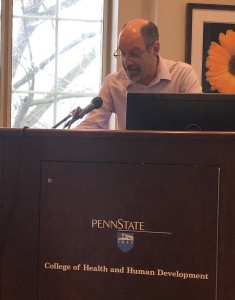
This article is a revised and peer-reviewed version of a 2019 keynote address I delivered at the “Global Histories: Sport and Apartheid South Africa” symposium at Penn State University.
Abstract
Drawing mainly on a set of oral and written primary sources situated in their proper historical and geographical context, this article explores how multiple forms of agency and memory shaped the history of sport, apartheid and liberation in South Africa. In doing so, it argues that a new revisionist history is needed in order to problematize the entrenched ‘master narrative’ of South African sport history, which privileges national redemption and patriotic heroism at the expense of more complex individual, local and global dynamics. The article concludes with suggestions for future research directions in order to assist a process of decolonizing sport history in South Africa.
To link to this article: https://doi.org/10.1080/09523367.2020.1773434
I was recently interviewed by Outside Write, the UK podcast about football (soccer) travel, history and culture.
In just 45 minutes we covered a lot of ground in the history of football in Africa: the arrival and spread of the sport during the colonial era, and stories about race, class, politics, and international migration. We even had time to highlight some watershed World Cup moments.
Click here to listen. Enjoy!
This video is part of my contribution to the May 2 Sports Africa Network online round table on the film “Sadio Mané: Made In Senegal.”
Here is a video recording of the event:
Panelists
Prof. Simon Adetona Akindes, University of Wisconsin-Parkside
Prof. Peter Alegi, Michigan State University
Dr. Tarminder Kaur, University of Johannesburg
Prof. Ousmane Sène, West Africa Research Center (WARC), Dakar
Moderator:
Dr. Martha Saavedra, University of California, Berkeley
From left: Boyzzz Khumalo, Tendai Jirira, Peter Alegi, Tumi Moshobane, Lesedi Mosielele
The second episode of the Umhlaba Podcast, a program about sports and education in Africa and America, has been released! [Click here for free download.]
In this episode, Umhlaba Vision Foundation founder Boyzzz Khumalo and I conduct a wide-ranging interview with South African midfielder Tumi Moshobane of Lansing Ignite and Zimbabwean defender Tendai Jirira of Detroit City FC.
The young men shed light on growing up playing soccer in youth academies and school teams in South Africa and Zimbabwe and tell us about their experiences pursuing professional soccer careers in the United States.
The conversation highlights the crucial role of education in ensuring long-term success as well as the value of healthy lifestyles, personal discipline, and giving back to the community by helping disadvantaged boys and girls have better opportunities in sports and education.
Aspiring South African coach Lesedi Mosielele joins the discussion towards the end, and eloquently states that Moshobane and Jirira are inspirational role models for many Africans dreaming of overseas success, on and off the pitch.