Categories
Players

Banyana Banyana Lose with Dignity to Sweden at 2012 Olympics


Guest Post by Chris Bolsmann (c.h.bolsmann [at] aston [dot] ac [dot] uk)

COVENTRY–In a week when South African cricketers and golfers recorded convincing victories, a hat trick of results would have seen South Africa’s women’s national team celebrate their first appearance at the Olympic Games by beating Sweden. But facing a team ranked 4th in the world, Banyana Banyana (Zulu for “the ladies”) could not pull off the miracle win.

The South Africans met their Swedish counterparts in Coventry, 100 miles north of London, in the second match of a double header. Japan beat Canada 2-1 in the early game in front of 18,000 spectators, while the 2011 World Cup third-place finishers defeated South Africa 4-1.

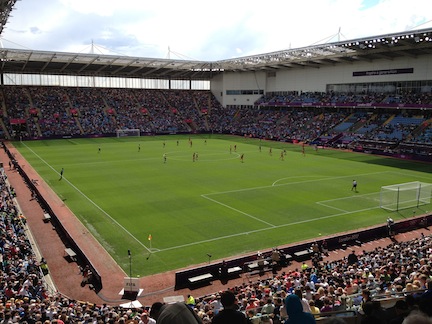
Normally called the Ricoh Arena and home to Coventry City FC, the City of Coventry Stadium looked quite different from its normal appearance full of advertising hoardings. The Olympic organisers were not quite able to cover up all of Coventry City’s history though, as a photo of the 1987 FA Cup winning team adorned one of the stadium walls.

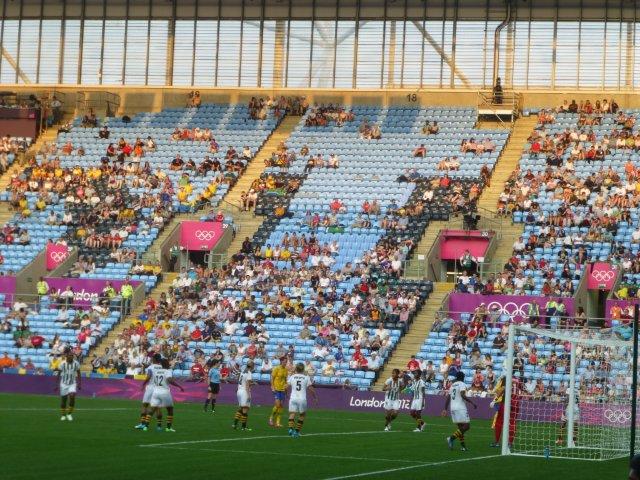
While Banyana Banyana have always worn the yellow and green colours of the South African Football Association, this time the squad entered the pitch in a horrible-looking green and white vertically striped kit, courtesy of the South African Sports Confederation and Olympic Committee’s official kit supplier: Erke, from China. The crowd had dwindled to a few thousand for the second match and the majority of photo press had left the stadium. A small contingent of South African fans remained who were vocal throughout but were outnumbered by Swedish fans and locals who supported their European neighbours.

Sweden kicked off and, ominously, twice hit the cross bar in the opening six minutes. The Scandinavians went ahead in the 7th minute thanks to a Nilla Fischer shot from outside the box that was cruelly deflected past United States-based Roxanne Barker in the South African goal. Then the Swedes again hit the cross bar and doubled their lead in the 20th minute when Lisa Dahlkvist poked home a ball from the flanks. A minute later Sweden scored a third goal when South African stalwart Janine van Wyk was beaten for pace on a through ball and Lotta Schelin slotted past the on rushing South African keeper. After 21 minutes Banyana’s debut had turned into a nightmare and a real humiliation was on the cards.

The South African midfield were constantly over run by the more forceful and creative Swedes and the defence were outpaced on numerous occasions, allowing for the Swedes to cross balls into the box at leisure. To her credit, Barker dealt well with crosses and high balls and remained calm under constant Swedish pressure.

The second half saw Banyana kick off with far more purpose and creative intent. In the 60th minute, Portia Modise, a former World Player of the Year nominee, dispossessed a Swedish midfielder well within the South African half and from inside the centre circle unleashed a wonderful strike to beat Hedvig Lindahl. Modise’s goal restored South African spirits and momentarily gave South African supporters some hope. But three minutes later Schelin got her second goal of the match and restored the three-goal margin.

The final quarter of the game saw South Africa struggle with fitness and the match ended with a resounding victory for the Swedes. Sweden had over 57% possession and outshot South Africa 21 to 7. Banyana Banyana were outclassed by a technically superior and fitter Swedish side. After the shock of allowing three goals within 25 minutes, Banyana settled and showed a few individual moments of skill but were unable to retain possession for any length of time. It won’t get any easier in this tournament for South Africa: they face Canada on Saturday and World Champions Japan the following week.

Categories
Players

8 Things I learned from the John Terry decision


On Friday, Howard Riddle, Senior District Judge in the Westminster Magistrates’ Court, found Chelsea captain John Terry not guilty of racially abusing Queen’s Park Rangers Anton Ferdinand. Here are eight things I learned by reading Judge Riddle’s decision:


1. “There is no doubt that John Terry uttered the words ‘fucking black cunt’ at Anton Ferdinand” (p.13).

2. TV footage unequivocally demonstrates that “Terry directed the words ‘black cunt’ in the direction of Anton Ferdinand” (p.3).

3. In a statement to the English FA Terry 5 days after the incident, remembered saying to Ferdinand “I think it was something along the lines of, ‘You black cunt, you’re a fucking knobhead'” (p.10).

4. Lip reading experts are amazing people who do important work, but this doesn’t mean much in the big picture.

5. Terry said what he said in the heat of the game and was angry, physically and mentally tired (pp.13-14). Seriously.

6. Give money to a charity in Africa: it’s a great alibi (as Elliot Ross explains here).

7. That nobody on the pitch claims to have heard Terry calling Ferdinand a “fucking black cunt” at the time and that “there are limitations to lip reading” [p. 14]) was used to obfuscate the undisputed factual evidence of the video footage.

8. The “not guilty” verdict reflects tortuously twisted logic. The decision seems to hinge on the possibility that Terry hurled the insult at Ferdinand only after the latter had “accused Mr Terry on the pitch of calling him a black cunt” (p. 14). “It is therefore possible,” Judge Riddle concludes, “that what he said was not intended as an insult, but rather as a challenge to what he believed had been said to him” (p. 15). So let me see if I understand this legal reasoning correctly: it is not racially abusive speech to call a black person a “fucking black cunt” if it’s in response to an accusation of calling you a fucking black cunt. Huh?

As @NutmegRadio eloquently tweeted: “The John Terry verdict now stands as a how-to-guide for how to escape a racially aggravated public order offense in the UK.”

Categories
Hosting

Gordon Igesund named Bafana Bafana coach


It’s official: Gordon Igesund is the new Bafana Bafana coach. The well-travelled Durbanite was the outright favourite for the job, and his appointment is the climax of what has been a remarkable coaching career.

Igesund’s first coaching job was in 1985 as a player-coach for Witbank Aces. For the next 11 years, he mainly coached modest teams battling to avoid relegation, sometimes unsuccessfully. In 1992 he won the NSL Second Division title with D’Alberton Callies, but his rise to prominence began in 1996-97 when he guided Durban’s Manning Rangers to the inaugural PSL title. More league honors followed at Orlando Pirates (2001-02), Santos (2001-02), and Sundowns (2006-07), which made Igesund the only coach to annex the championship with four different PSL clubs.

His appointment as the national team coach on a two-year contract comes on the back of an impressive stint at the helm of Moroka Swallows. The fabled Soweto team sent Igesund an SOS eighteen months ago when they found themselves at the bottom of the table nearly halfway through the season. Igesund masterminded The Dube Birds’ great escape, and this season they had an astonishing year, finishing an agonising second to Orlando Pirates.

It is Igesund’s heroics at Moroka Swallows that SAFA expect him to emulate with beleaguered Bafana Bafana, currently ranked 68th in FIFA’s world rankings. South Africa’s qualification bid for the 2014 World Cup in Brazil is in serious jeopardy after draws against Ethiopia and Botswana. While South Africa’s hosting of the next edition of the African Nations Cup guarantees Bafana Bafana’s participation, there is well-founded anxiety in the country over the threat of an uninspiring showing in the tournament.

“The bigger picture is the 2013 AFCON and qualifying us for Brazil 2014,”declared SAFA President, Kirsten Nematandani, at Igesund’s unveiling. It’s the same brief former Bafana coach Pitso Mosimane was given two years ago. As SAFA made abundantly clear to Igesund, should the national team fail to reach the semi-finals of the African Nations Cup next year, then he will join Mosimane on the growing list of former Bafana coaches, which now stands at eighteen.

Igesund’s pedigree gives many South Africans hope that, despite recent results, he is indeed the manager who can lead Bafana to the continental crown and to the World Cup in Brazil. He is a wily old fox who has paid his dues in the trenches. He knows how to nurture self-belief and instil a desire to win into any team under his tutelage, regardless of available talent and financial resources. We wish him good luck in his new position.

There is a problem, however, that Igesund cannot solve even if he ends up meeting his new employers’ lofty objectives. That is, SAFA’s understanding of the “bigger picture” in domestic football is confined to four-year cycles for the men’s senior national team (or in this case a two-year cycle). But local football needs sound management, serious youth development for boys and girls, better coaches’ training, and infrastructural improvements at the grassroots. In other words, the goals SAFA has set for Igesund are no more than an attempt at a quick-fix solution.

SAFA would have done better to concede their administrative shortcomings, apologize for the dismal state of football in the country, and state that Igesund is the best bet for turning hapless Bafana Bafana into a winning team. Instead, SAFA hired the country’s most decorated coach and required him to take one of the least feared teams in Africa to the semi-finals of the continent’s premier tournament and then to the World Cup. While there is no question of Igesund’s success as a club coach, it would not be surprising if, after the 2013 African Nations Cup, he were to become the 19th Bafana coach in 20 years.

Categories
Players

Spain: The Greatest Team Ever?

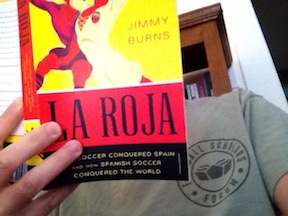
Euro 2008, World Cup 2010, and now Euro 2012 champions. Spain’s 4-0 demolition of Italy in yesterday’s final in Kiev secured their third consecutive major tournament victory in the last four years. The question many are asking today is whether La Roja is the greatest team in the history of football.

Hundreds of millions of TV viewers watching the final in pubs, homes, and public venues around the world witnessed Spain’s best performance of the Euros. Propelled by Xavi’s sudden resurgence and Del Bosque’s flawless tactics, lineup, and game management, the Spanish tiki-taka approached a near-perfect synthesis of art and science. Meanwhile Italy’s tired legs and coach Prandelli’s naive decision to deploy 2 strikers, no defensive midfielders, and field injured Chiellini, De Rossi and even Motta (as a final substitute!) exposed the substantial qualitative gap separating the two finalists.


While my emotional wounds from enduring such a hideous hiding are still raw, I’m interested in what people have to say about how Spain 2008-12 compares, say, with Brazil 1970? Germany 1972-74? Or even Uruguay 1924-1930 and Hungary 1950-54 if we delve into a radically different media era? Should we consider club teams too? Real Madrid 1955-60, Ajax 1971-73, Milan 1989-90, and Barcelona 2009-2011 immediately come to mind.


Here are my top 5:

1. Uruguay 1924-30 (winners of 1924 & 1928 Olympics and 1930 World Cup)

2. Spain 2008-2012

3. Brazil 1970 (good case for the best ever, but won only one title)

4. Hungary 1950-54 (undefeated, 42 wins and 7 draws).

5. Barcelona 2009-11 (FIFA Club World Cup: 2009, 2011; Champions League: 2008–09, 2010–11; UEFA Super Cup: 2009, 2011; La Liga: 2008–09, 2009–10, 2010–11; Copa del Rey: 2008–09, 2011–12; Supercopa de España: 2009, 2010, 2011)

What do you think? Share your rankings in the comment section!

Categories
Players

Afritalians: Past is Prologue

The Africanization of Italy may have started 2200 years ago as Hannibal of Carthage led his troops and elephants across the Alps on the way to Rome, but Mario Balotelli’s two-goal performance in Italy’s defeat of Germany in the Euro 2012 semifinal may be mainstreaming it.

Italians across the political spectrum are gushing in their praise of the 21-year-old striker. “Pride of Italy!” screamed the web site of La Gazzetta dello Sport, which earlier in the week had printed an insulting cartoon of Balotelli as King Kong by Valerio Marini (see below). (Despite an outpouring of criticism from readers and on social media, the paper could only muster this sad excuse for an apology: “if certain readers found the cartoon offensive, we apologize.”)

Earlier in the tournament Balotelli had won accolades for his acrobatic overhead strike against Ireland and for his impeccable penalty which opened the shootout against England (scored against Man City teammate Joe Hart). Now, on the eve of the final against Spain in Kiev, ordinary Italians and the media are comparing Balotelli to Gigi Riva, Totò Schillaci, and Gianluca Vialli — illustrious Azzurri of the past who transcended the football pitch to become popular icons of national culture. A big and very noticeable difference between Super-Mario and his predecessors, of course, is that Balotelli is black — the Palermo-born son of the Barwuahs from Ghana who was adopted by the Balotellis of Brescia. He is the first Afritalian football superstar.

Super-Mario’s central role in potentially ushering in a new phase in the Africanization of Italy is reflected in Italian media stories highlighting how Mario is like you and me: he loves football, family, pizza, and hanging out with his friends. In a country where mothers are sacred and where the Virgin Mary is venerated almost as much as her more famous son, Mario’s loving embrace of Mamma Silvia in the stands at the Warsaw stadium shot an arrow into the heart of every Italian. “Boastful and ‘mammone’, Balotelli represents the prototype of the Italian,” wrote Il Giornale, a conservative paper owned by Silvio Berlusconi’s brother, Paolo.

And Balotelli is not an isolated case; he’s not even the only Afritalian in the Euro squad. Sitting on the reserves’ bench is 24-year-old Angelo Obinze Ogbonna (at left), a central defender who plays his club football for Torino. Born in Cassino, near Rome, of Nigerian parents, Ogbonna was recruited into the Torino youth academy at age 14 and played his first serie A match at 19. Like Balotelli, Ogbonna speaks Italian without a trace of accent. The experiences of Super-Mario and Ogbonna open up an opportunity to consider the history of Afritalian footballers.

Let’s start with Claudio Gentile. He was born in Tripoli, the son of a Sicilian father and a Tripoli-born mother possibly of Italian background, and grew up playing street football in Libya before moving to Como in 1961 with his family. Nicknamed “il libico,” Gentile had his best years at right back for Juventus and Italy in the 1970s and early 1980s, forming with Dino Zoff, Antonio Cabrini, and Gaetano Scirea one of the stingiest defensive lines of all time. Gentile’s ferociously effective man-to-man marking of Maradona and Zico in the 1982 World Cup, which Italy won, has become the stuff of legend.

We had to wait nearly two decades for the next Afritalians to make an appearance in the national team. In 2001, Fabio Liverani, the Rome-born son of a Somali mother and Italian father, made his international debut in a friendly against South Africa. Despite a solid career as a midfielder with Lazio, Fiorentina, and Palermo, Liverani only played twice more for the Azzurri. Around the same time, Matteo Ferrari, the Algeria-born son of an Italian father and a Guinean mother, played eleven times in the heart of Italy’s defense. Prior to Balotelli’s success, Ferrari had held the record for most international appearances for an Afritalian. (He now plays for the Montreal Impact in MLS.)

There are other players of African blood in Italian football. Among them, Stephan El Shaarawi, Stefano Chuka Okaka, and Fabiano Santacroce (of Afro-Brazilian/Italian parentage) have been capped at junior level. There is also a female Afritalian: left back Sara Gama (at right), who also earned the distinction of becoming the first Afritalian woman to captain the U-19 national team, and leading them to the 2008 European title.

Mauro Valeri, a sociologist and author of La Razza in campo: Per una storia della Rivoluzione Nera nel calcio (EDUP, 2005) wonders if the increasing presence of black players at junior and senior level is “perhaps a sign of a transformation underway, of the affirmation of a Black Revolution [in football] that for more than a decade has been unfolding in Italy.” While structural changes would be necessary for such a shift to be lasting and meaningful, social perceptions of Afritalians may be changing thanks to Balotelli’s sudden popularity. In a grim age of austerity and structural adjustment, Italians seem eager for another taste of Super-Mario-triggered football euphoria.

Categories
Video

Germany’s History of Failure vs. Italy Continues


Super-Mario Balotelli wrote a new page in Germany’s History of Failure against Italy in Warsaw today. He scored two goals, the first a header off a delightful Cassano cross; the second a thunderous strike from outside the box, which he celebrated in inimitable style (photo above). He is Italy’s pride and joy.

Manager Cesare Prandelli did his part as well, completely outcoaching his German counterpart Jogi Loew. Italy now moves on the final against Spain on Sunday in Kiev.

Full Italy-Germany highlights courtesy of UEFA.com here.

Categories
Video

Germany’s History of Failure vs. Italy: Part 3


After two more draws (1-1 and 0-0) at the 1988 and 1996 Euros, on July 4, 2006, Germany and Italy met again in the semifinals of the World Cup. The venue was the Westfalenstadion in Dortmund, an intimidating ground for any visiting team.

In a remarkable affair reminiscent of the 1970 World Cup semifinal at the Azteca (see my previous post here), extra time was needed. The climax defies description. So let’s leave it to Fabio Caressa and Giuseppe Bergomi (1982 World Cup winner at age 18) of Sky Italia to resurrect the memories — spine-tingling ones from an Italian point of view — of that cathartic evening.

Follow me on Twitter during the game tomorrow: @futbolprof

E daje Italiaaaaa!