 By Bruce Berglund (cross-posted from @NewBookSports)
In 2010, for the first time, an African nation hosted the FIFA World Cup. The advertisements surrounding the tournament used graphics and sounds intended to conjure the image of a vibrant, exotic land. In fact, though, the African-ness of the South African World Cup was pretty thin, when not wholly fabricated. For example, the music that introduced ESPN’s World Cup coverage sounded very African, as it opened with the sounding of an ox horn (the promo showed a bare-chested tribesman blowing the horn atop a mountain, silhouetted against the setting sun) and then built with pulsing drums and a choir singing layered refrains. But the piece had been written by a composer from Utah, the musicians had recorded it in Utah, and the choir consisted of members of the Broadway cast of The Lion King. At least Shakira’s ubiquitous song “Waka Waka (This Time for Africa)” had a more substantial African connection. It had been lifted, initially without credit, from a Cameroonian military song made popular in the 1980s by the group Golden Sounds.
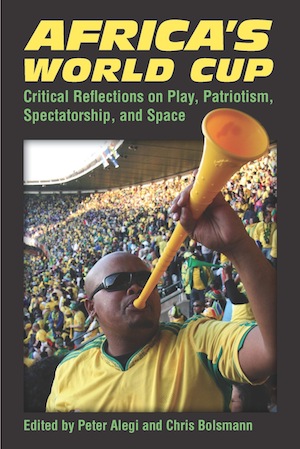
The ironies of the 2010 tournament in South Africa are revealed in a number of essays in Africa’s World Cup: Critical Reflections on Play, Patriotism, Spectatorship, and Space (University of Michigan Press, 2013), edited by Peter Alegi and Chris Bolsmann. In the interview with Peter, we learn of the findings and observations of the volume’s contributors: an international collection of anthropologists, architectural critics, bloggers, geographers, sociologists, journalists, photographers, and former players who all attended matches in South Africa. They make sharp criticisms of class divides at the venues, the nationalism and commercialism, and, of course, the imperial reach of FIFA. But as we hear from Peter, the book’s authors were also fans. When mixing with other fans outside the stadiums, and then cheering their teams when the matches began, even normally skeptical academics and journalists were caught up in the event. Their experiences show that, for all its faults, the FIFA World Cup is still an incomparable event.
Click here to download the mp3 of the interview.
Category: Fútbology
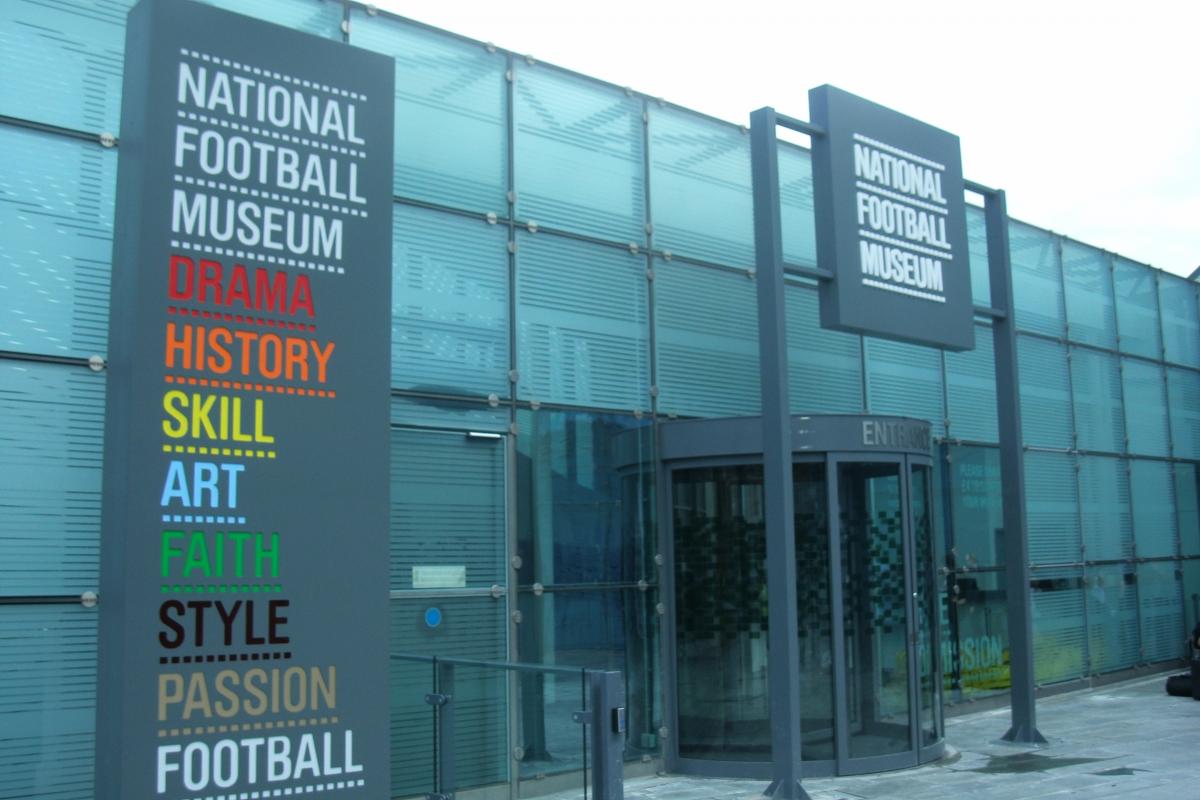
150 years after Ebenezer Morley and alumni of several elite schools founded the Football Association at the Freemasons’ Tavern in Great Queen Street, London, the Football 150 academic conference celebrates this historic anniversary. The gathering of soccerati takes place on 2-4 September at the National Football Museum in Manchester, UK. It is a joint project of the NFM, International Football Institute (University of Central Lancashire), and International Centre for Sports History and Culture (De Montfort University). The conference’s stated aims are “to reflect on the history of the Football Association and develop a blueprint for the future of the game and its study.”
Keynote speakers include historians Tony Mason, author David Goldblatt, and UEFA Executive Committee member Karen Espelund. A rich program features panels on the game’s global history, art, fan cultures and identities, migration, governance, media, and its broader social, political, and economic implications. The Arab Football Forum 2013 on Wednesday, September 4, will grapple with the potential impact of Qatar 2022 on MENA countries, the political role of football in the wake of the Arab spring, and women’s football.
My paper is part of a larger ongoing project on the history of South Africa’s hosting of the 2010 World Cup. Drawing from my digital archive of thousands of news items about the World Cup accumulated over nearly a decade, as well as government documents, published reports, oral testimony, personal observations, as well as the scholarly literature, the study argues that SA2010 reveals a paradox. On the one hand, South Africa’s image and influence in global football reached unprecedented heights thanks to the successful hosting of the tournament. But on the other hand, the overall social health of the local game (excepting a handful of elite clubs) suffered, particularly at the amateur, school, and youth level. In a small way, this paper addresses the lack of academic histories of World Cup tournaments and aims to generate discussion about the complex political, economic and cultural dynamics of football, particularly as they relate to South Africa, Africa, and more broadly to the Global South. (For more details on the topic, see my new co-edited book, with Chris Bolsmann, Africa’s World Cup.)
On my way to Manchester, it seems fitting to meet David Kilpatrick at the Freemasons Arms in London, “the spiritual home of the FA.” After a suitably English dining experience (whatever that means and entails), we’ll make our pilgrimage to the Emirates Stadium for my first North London derby!
Track conference proceedings via Twitter with the #Football150 hashtag and follow these participants: @DrDKilpatrick @ChrisBolsmann @SoccerHistoryUS @JeanMWilliams @FromaLeftWing @Davidsgoldblatt @MattLMcDowell @collinstony @mideastsoccer @j_richo1990 @GaryJamesWriter @StaceyPope20 @ShelleyBBC @ffion_ @mateobrown @DavidChilds @futbolprof
Categories
Online Fútbol University
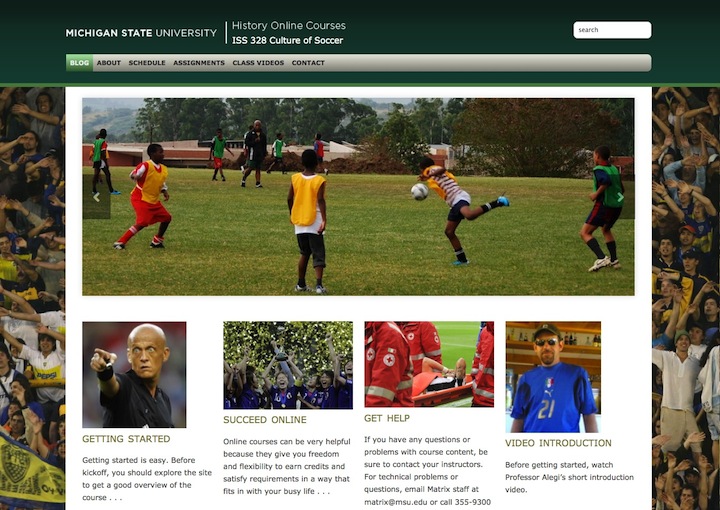
My online course “Culture of Soccer” launched today at Michigan State University. With 120 students enrolled, it recognizes and nurtures younger Americans’ growing appetite for fútbol. It may even be read as a “‘rejection’ of U.S. isolationist/exceptionalist attitudes,” as @OhioGooner put it to me on Twitter. But it’s also important to note that the course satisfies a social science component of MSU’s general education requirements.
As an exercise in pragmatism and poetry, this seven-week course explores fútbol and social change in a global context. It combines general analysis with specific case studies to make connections across time and space. By examining the intersections of the historical and the contemporary, the individual and the social, the local and the international, it explores how and why race, ethnicity, class, gender, media, and business made, and continue to make, the world of soccer we see today.
The course takes place almost entirely on the class WordPress site. Hosted and designed by the good people at Matrix–the digital humanities center at MSU–the class blog is where students write and comment on the assigned readings and the password-protected lecture videos. MSU’s new course management system (Desire2Learn) complements the WordPress site as a simple way to submit final papers and to release grades.
Why online teaching? First, it provides our department with much-needed funds for faculty research and the graduate program at a time of vicious budgetary cuts. Second, it strengthens our department’s partnership with Matrix. Third, online teaching funds two of my PhD students, Hikabwa Chipande and Liz Timbs, whose labor as teaching assistants greatly eases the burden of grading and class management. Last and certainly not least, the digital domain gives me another way to enjoy doing the work I love, and produce and share knowledge beyond the boundary of the brick-and-mortar classroom. Let the games begin.
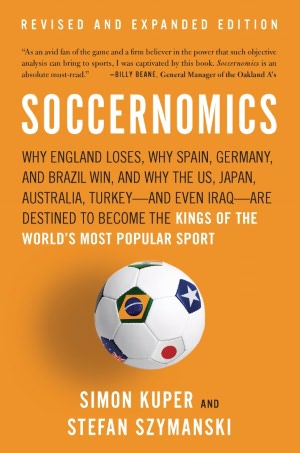
Soccernomics has been called “the Barcelona of football books” and the “Moneyball of soccer.” On Tuesday, April 16, the Football Scholars Forum discussed this influential book with the authors Stefan Szymanski (in East Lansing, Michigan) and Simon Kuper (via Skype). One of the most important questions asked was: How does the introduction of big data and “soccer analytics” change our understanding of fútbol clubs, fans, and nations? The forum also featured intriguing comparisons between Western Europe and the United States.
Joining the authors were: Andrew Guest, Brian Bunk, Christoph Wagner, Corry Cropper, David Kilpatrick, James Dorsey, Mark Siegel, Hikabwa Chipande, Christian Orlic, Benjamin Dettmar, Peter Demopoulos, Steven Apostolov, Tom McCabe, Alex Galarza, and me.
For Twitter timeline click here.
Listen to the audio from the session here (mp3).
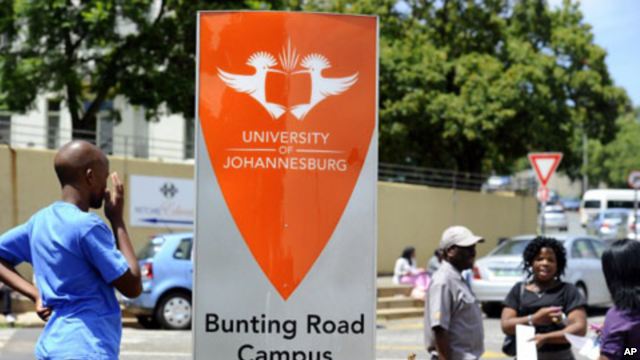
Next month the University of Johannesburg is hosting an exciting “Research Forum on South African Football.” Organized by the UJ Department of Sport and Movement Studies, the gathering will consider three papers that address socio-historical, sociological, and developmental aspects of football in South Africa, as well as broader issues related to the local game.
In his paper “Professional Football in Apartheid South Africa: Leisure, Consumption and Identity in the National Football League, 1959-1977,” sociologist Chris Bolsmann (Aston University) will present a preliminary analysis of the NFL, a “whites-only” league established in 1959 by a group of (white) Johannesburg businessmen. Playing in segregated stadiums, the NFL introduced professional football to South Africa. At the height of its popularity, it had two divisions, attracted significant corporate sponsorship, and recruited prominent foreign players, such as George Best and Bobby Charlton. The NFL became the leisure and sporting entertainment of choice for significant numbers of black and white South Africans and was unparalleled in popularity during this period.
Ethnographer Marc Fletcher (Department of Sociology, University of Johannesburg) will explore contemporary dynamics in a paper titled “Divisions, Difference and Encounters in Johannesburg Soccer Fandom.” This ethnography of Kaizer Chiefs, Bidvest Wits, and Manchester United supporters’ clubs in the city shows how supporters on the margins of these groups began to engage with the other, crossed racial and class divisions, and thus reinterpreted their understanding of soccer fandom and their wider experiences of everyday life in the city.
Last but not least, Chris Fortuin (Department of Sport and Movement Studies, University of Johannesburg) will discuss “Youth Football Development in South Africa.” The paper notes how in South Africa there is a severe lack of focus on youth football development to sustain national junior and senior teams. I also highlights that youth football development is not coordinated, there is limited success in nurturing young players for the international market, and coach development with a specific focus on youth football is strongly lacking.
This forum takes place on April 19, 2013, 10:00-12:00 at the University of Johannesburg’s Protea Auditorium, School of Hospitality and Tourism, Bunting Road Campus, Auckland Park. For more details please contact Dr. Chris Bolsmann (chris [dot] bolsmann [AT] aston [dot] ac [dot] uk or @ChrisBolsmann on Twitter).
In this video, Alex Galarza and I discuss digital fútbol scholarship at Michigan State University. The conversation ranges from Galarza’s doctoral dissertation entitled “Between Civic Association and Mass Consumption: The Soccer Clubs of Buenos Aires,” to the Football Scholars Forum, the online football think tank.
For more information about Galarza’s research click here.
 Alex Galarza, a PhD student in history at Michigan State University and co-founder of the Football Scholars Forum, has been awarded the João Havelange Research Scholarship. This prestigious award is administered jointly by FIFA and CIES (Centre International d’Etude du Sport), an independent research center created in 1995 by the governing body in collaboration with the University of Neuchâtel, and the City and State of Neuchatel, Switzerland.
Galarza’s project is titled “Between Civic Association and Mass Consumption: The Soccer Clubs of Buenos Aires.” It explores how clubs developed as both centers of mass spectacle and sites of everyday urban sociability. Club members and officials used political connections to secure city space and public subsidies for stadiums and the overall success of their professional teams. While clubs became centers of patronage and spectacle, they were also non-profit civic associations central to social and cultural activities in the city. Clubs provided educational facilities, libraries, leisure space, and political forums for their members.
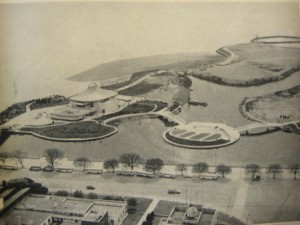
Galarza’s research examines the tensions within football clubs during the mid-twentieth century, an era when Argentine society entered a period of deep economic and political changes following the ouster of Juan Domingo Perón in 1955. Perón’s project aimed at developing a new kind of citizen and civic culture in which the popular classes would have a greater political voice and heightened access to new forms of mass consumption. Mass political participation and consumption remained critical and unresolved tensions during the democratic and military governments that followed. One powerful example of how soccer clubs gave shape and meaning to civic engagement, popular spectacle, and mass consumption is Boca Juniors’ Ciudad Deportiva (in photo above). This failed project was a mix between a stadium complex and amusement park, built over seven artificial islands on sixty hectares of land filled in the Rio de la Plata.
Click here to read a digital version of Galarza’s preliminary work on the fascinating history of the Ciudad Deportiva.
Check back with us for an interview with Galarza in the coming days.