Nate Silver is a box score genius. Nate Silver can call states, counties and wards like no other. But can Nate predict the winner of the World Cup?
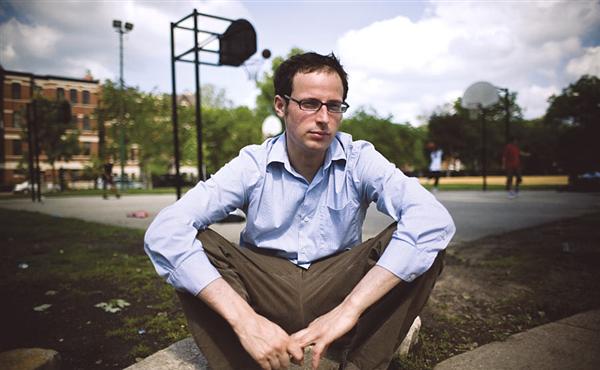
Some of our global readers may find Nate Silver’s statistical offerings on “soccer” other worldly. Who is this four eyed American running the numbers on our game, I hear some of you dismissively spit. But can it be true one can only understand football if one starts drinking about eleven in the morning in a backstreet pub or bar in the vicinity of some corrugated contraption called a football ground. There has to be a middle ground. Nate Silver deserves the utmost respect. But you know among the remnants of ale, chips, pies and gravy that your guts can tell you something Nate’s numbers cannot.
Nate has promised to delve into football realm for some time. His arrival is most welcome. FIFA has improved its ranking system. FIFA’s seeds were the deserving form teams (though Silver has a minor objection preferring Portugal over Italy.) Still, Silver’s Soccer Power Index is the Snow Leopard of upgrades. It is on paper at least, the best ranking of international football.
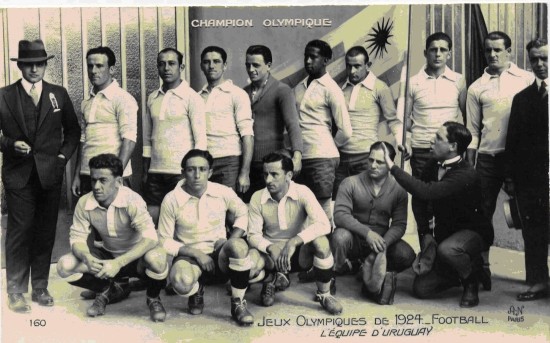
But can the running of fun football statistics really predict winners with such scientific certitude. How can it, for example, adjust for the emergence of a Uruguayan midfield prodigy, the determination African Disapora players from random places like Honduras to perform at that higher level, or the late call up of that left back capable of both the beautiful football and the most horrendous crimes ever witnessed on a football field, where one No.3’s mis-kick can find the back of the net or break Beckham’s leg in three places, not to mention all the other shenanigans?
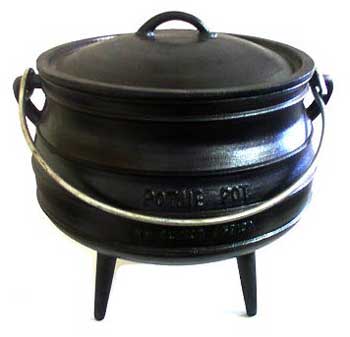
Pot Observations
TEN POT OBSERVATIONS.

1. FIFA got the seedings right. Pot 1 seeds earned their ranking. France did not. France’s final appearance was four years ago.
2. Chile, Paraguay and Uruguay have come out of the pot alignment better than most. Each of the smaller South American nations will avoid the big five African qualifiers in the 1st Round.
3. Argentina and Brazil cannot avoid the African qualifiers from Pot 3. The seeds for two potential Groups of Death have now been sown. Has FIFA put Brazil at risk for an early bath?
4. The most frightening Group of Death would be: Brazil, Mexico, Côte d’Ivoire and Portugal.
5. The dark horse of Pot 2 is Honduras.
Organising Committee Comes Correct
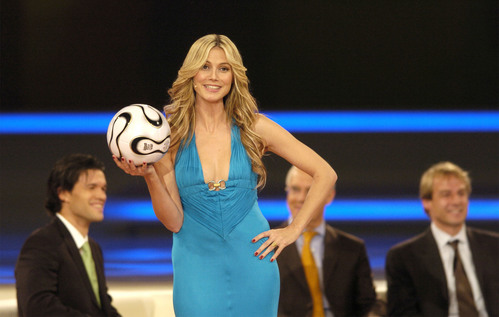
Move over, Heidi. Johnny Clegg coming.

The FIFA Organising Committee came correct today. The decision to base the procedure for the Final Draw of the 2010 World Cup on the October 2009 World Ranking is a good one. The ranking system was raw at first, but now it is more refined and provides a rather useful way to measure the relative successes and failures of the world’s footballing nations.
South Africa will be joined by Brazil, Spain, the Netherlands, Italy, Germany, Argentina and England as the seeded teams in Pot 1.
The other 24 teams will be divided into the 3 pots, each with 8 teams.
Pot 2 will consist of teams from Asia (Australia, Japan, Korea DPR, Korea Republic), North, Central America and the Caribbean (Honduras, Mexico, USA) and Oceania (New Zealand)
Pot 3 will include teams from Africa (Algeria, Cameroon, Côte d’Ivoire, Ghana, Nigeria) and South America (Chile, Paraguay, Uruguay)
Pot 4 will contain the remaining European teams (Denmark, France, Greece, Portugal, Serbia, Slovakia, Slovenia and Switzerland)
I will be Twittering on Uruguay for The Guardian during the World Cup draw in Cape Town.
Expect a heavy Uruguayan flavour in the coming hours. A virtual Dulce de Leche of Uruguayan football.

Thinking With Our Feet

On December 3-5, 2009, Toronto’s York University hosts an international conference “Global Football: History, Gender and Nation.” Inspired by the upcoming 2010 World Cup, scholars and journalists will analyze a rich set of topics, including the transnational history of the African game, the Israeli-Palestinian encounter through film and literature, Mussolini, masculinity, and football, and fan cultures in Sweden. Simon Kuper is giving the keynote address. Click here for more details about the conference.
Life, Love, and Football in Kenya
In the year of Africa’s World Cup, it’s easy to overlook the host continent’s “other” players. Take these teenage girls in rural Kenya, for example. They organize, manage, referee, and play football in the Moving the Goalposts program. But this is not just about the game. Health education and social support are vital components of Moving the Goalposts.
Parents in Kilifi District have embraced the project: “But I have one problem in my house with Mbeyu [her daughter] and this issue of football,” says the mother of one of the players. “If she comes home from the football field and they have won, we’ll hear the whole story, how she scored, we’ll all laugh, the whole house will know. . . . But if they have lost, ha, Mbeyu—she’ll be ill and the whole house will be ill! . . . If she’s lost, there no laughter in the house.” (Read more of the girls’ stories in Sarah Forde’s gripping book Playing by Their Rules.)
The Screamer in Sudan
In case you missed the goal of the World Cup playoffs. Here it is. Antar Yahia’s screamer in Sudan.
Relive the goal. Relive the celebrations. Be in no doubt: This is for 1982. This is for the players with the peppery hair and tears in their eyes. This is for the players who were robbed.
Ireland may get their revenge vicariously through Algeria. The Desert Foxes will show Monsieur Henry and his merry band of collaborators no mercy.