Categories
Players

Struggle On, Luyanda Ntshangase

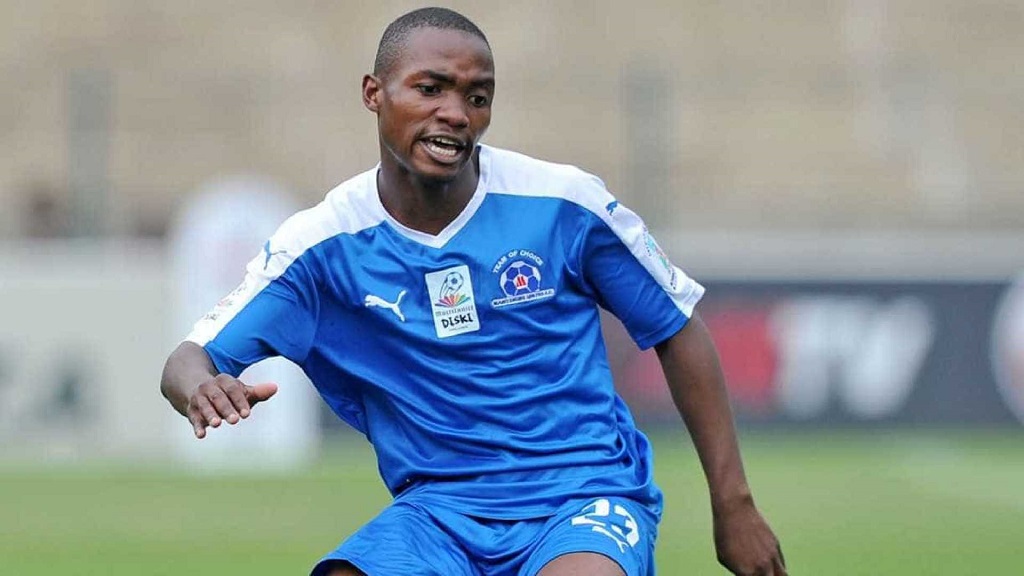
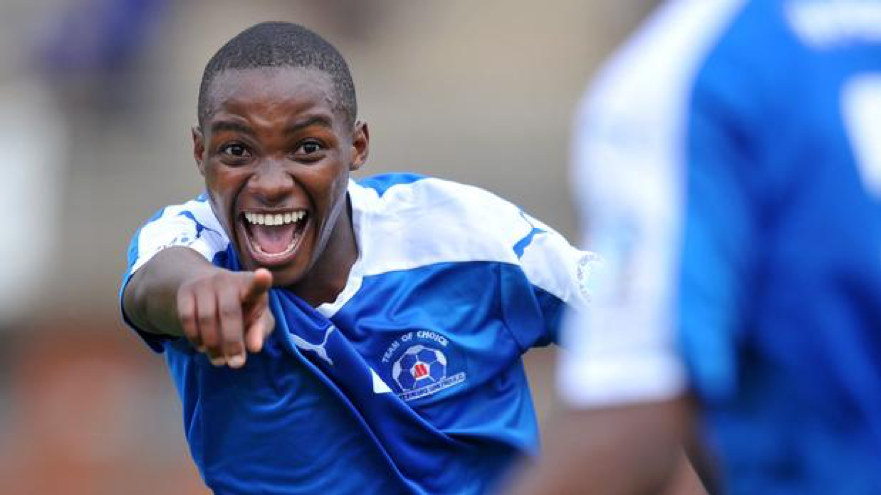
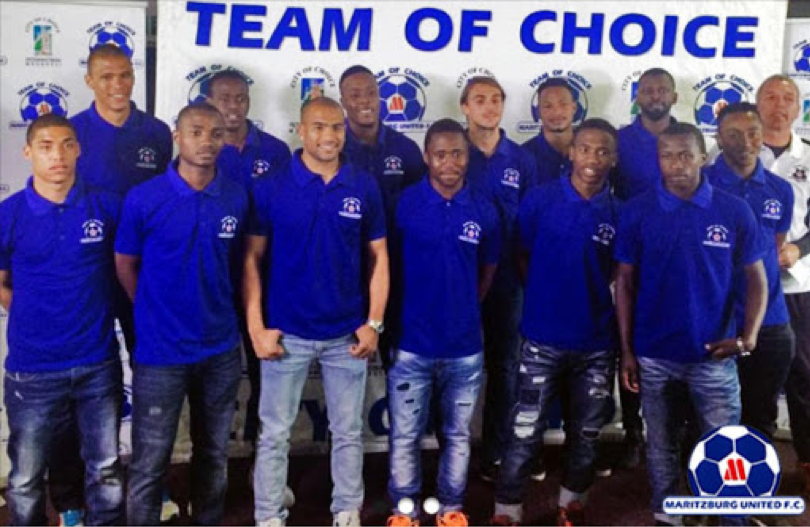
On March 1, 2018, 21-year-old Maritzburg United striker Luyanda Ntshangase was struck by lightning during a friendly match. He is in a medically induced coma and remains in critical, but stable condition. Our thoughts and prayers are with Ntshangase and his family in the hope of a speedy and full recovery.

Luyanda_Ntshangase1

I met Luyanda Ntshangase in 2013 when I began to work with Izichwe Youth Football Club in Pietermaritzburg, South Africa. A self-proclaimed “local boy,” Ntshangase was born on January 25, 1997. He was raised in Imbali (Zone 2), an apartheid-era township outside Pietermaritzburg.

Like many South African boys, he began playing football at age six with his friends in the neighborhood. By age eight, he knew that he wanted to play the game for the rest of his life. His parents supported this dream, driving their son to training sessions, watching games, and providing critical support at home.

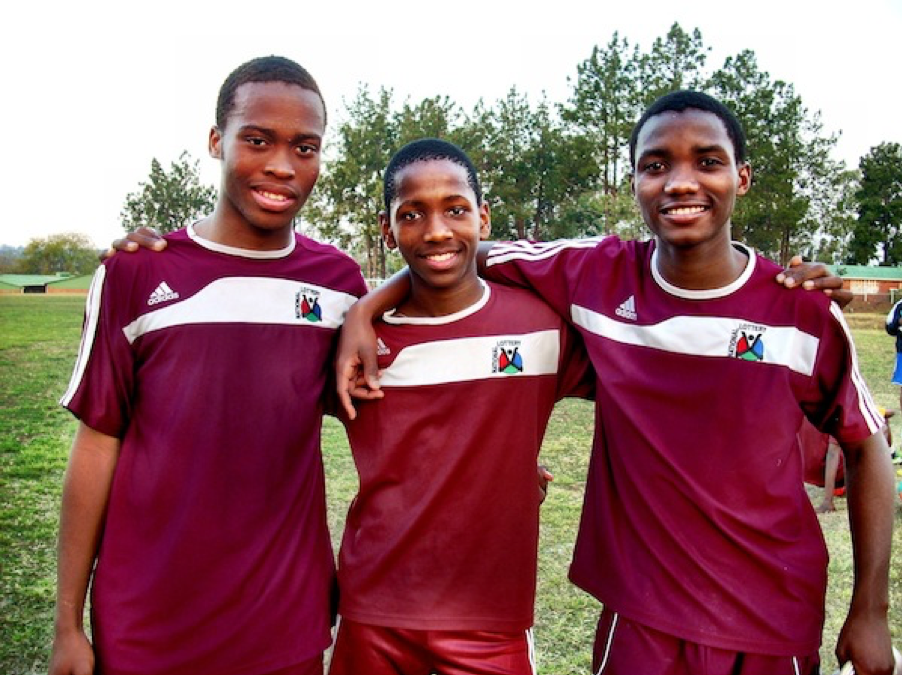
He joined Izichwe, named after Shaka Zulu’s regiment, in 2012. Though Ntshangase initially struggled to catch up with the other players who had been with Izichwe since 2010, he quickly adjusted and became a cornerstone of the team. He exemplifies everything that Izichwe stands for: “honesty, integrity, working hard, pushing yourself at all times . . . discipline, hard work.”

When I observed practices, Ntshangase stood out for his extraordinary focus and drive. He pushed himself and, by example, inspired his teammates to strive for their best at every training session. This talent and work ethic afforded Ntshangase the opportunity to train with the KZN Football Academy and play a key role for his team in major youth tournaments such as the Nike Manchester United Premier Cup.

Luyanda also excelled in the classroom. The Izichwe coaches’ insistence on educational success made him “realize there is a lot more to life than just football, you know, there is also school–just getting better that side also.” After matriculating from Maritzburg College, a prestigious boys’ secondary school founded in 1863 that counts Alan Paton among its alumni, Nsthangase recently enrolled for a degree in politics at the University of KwaZulu-Natal.

Balancing these responsibilities was “demanding,” he said, quickly adding that “my school and my football go together . . . There’s life after football, you know?” With a maturity well beyond his 21 years, he recognized that “to move anywhere further is to keep on working harder and grow as a person and as a footballer also.”

Ntshangase_Izichwe

This wisdom and dedication was evident in 2016 when Izichwe played a friendly match against Maritzburg United, the local Premier Soccer League team. Ntshangase impressed head coach Ernst Middendorp, who invited him to train with his team. After a week-long training with the team, Middendorp contacted Thabo Dladla, Ntshangase’s coach at Izichwe, with the news that he wanted to offer the young striker a professional contract.

In February 2017, Ntshangase was selected for South Africa’s Under-20 national team (AmaJita). Upon receiving the news, he told the Maritzburg Fever: “I’m going to take that chance and grab it with both hands and show what I’m capable of and why I was selected. So if that opportunity comes for me–I’ll be very thankful,” he said.

Ntshangase_MBUTD

Speaking with Luyanda just a few months into his professional career, he exuded joy and certainty that there was still more to come at Maritzburg United. “[I’m] having [the] time of my life at the moment . . . it’s just the first step for me,” he said.

“I’m looking forward to building on, something bigger, better. It’s something I’ve always dreamed of [. . .]” Ntshangase continued. “I see myself in a few years being somewhere further than where I am now. It could be at another team. It could be at the same place but in a different role . . . but obviously I possibly wish to be at a bigger club or even overseas, you know? That’s where we all dream of going. So if I reach that goal that’s something I’d be very much proud of.”


Update: Tragically, on May 4, 2018, Luyanda passed away. Our heartfelt condolences to the Ntshangase family. May his soul rest in peace. The funeral service will take place at Alan Paton Hall, Maritzburg College, Princess Margaret Drive, Thursday, May 10, 10am.

Categories
Fútbology

Documentary Films as Soccer Storytelling

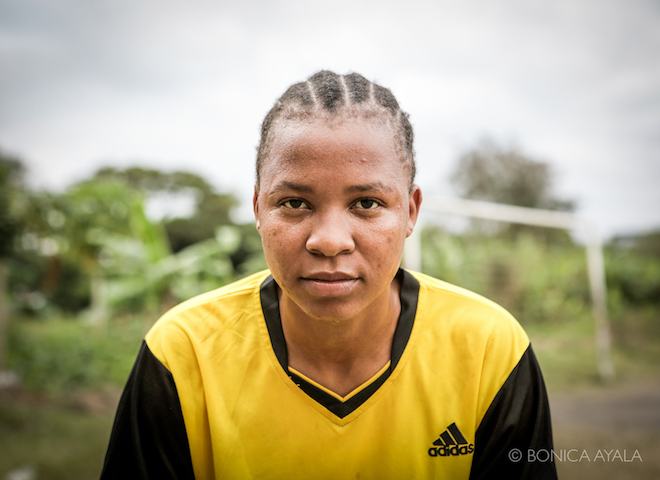
Portrait photo of Ayala (Zanzibari player)
I recently went on a cinematic journey that took me from women’s soccer in Zanzibar to a failed stadium-and-entertainment complex in Buenos Aires.

My travel agency, so to speak, was the Football Scholars Forum. On February 23 it held an online discussion of two low-budget, high-return documentary films. (A recording of the event can be found here. Audio quality improves significantly around the 20 minute mark.)

“New Generation Queens” by Megan Shutzer tells the story of a Zanzibari women’s team. The documentary follows the compelling lives of younger and older women to cast light on the culture of the women’s game on the East African island, which is 99% Muslim. The 50-minute film alternates interviews with passionate players and determined organizers with footage of training sessions on rudimentary pitches. As an historian, I especially liked the remarkable 1988 footage of a Swedish team playing against a local team: the first official women’s game in Zanzibar! After the set up, the film’s main story line becomes the New Generation Queens’ journey to mainland Tanzania for a major tournament. Only the younger players participate in the Under-15 event, an important recruiting venue for the Tanzanian national side. Shaba “Messi” has a lot riding on this competition.

“Ciudad Deportiva—El Documental,” co-produced by Alex Galarza and four Argentine journalists, tells the story of Boca Juniors’ failed attempt in the 1960s and early 1970s to build a 150,000-seat stadium and recreational complex. The 45-minute documentary combines rich archival footage with still photography and interviews, to reconstruct the history of a monumental sports and urban development project. Focusing on Boca Juniors, one of the most popular clubs in the fútbol-mad city (cf. River Plate, Velez, San Lorenzo, among others), and their influential, albeit dodgy president, Alberto Armando, “Ciudad Deportiva” uncovers multiple and complex links between soccer, politics, and urban history in the mega-city of Buenos Aires.

The two enterprising film makers bring impressive academic credentials to their projects. Galarza has a PhD in Latin American History from Michigan State (where I had the distinct pleasure of serving on his doctoral committee), and is currently a Postdoctoral Fellow at Haverford College. Shutzer has a BA from Harvard, did graduate work at Stanford, is fluent in kiSwahili and works in development.

At the Football Scholars Forum, the pair explained the genealogy of their (first) films, narrative choices and production techniques, as well as approaches to film distribution. Notably, Galarza and Shutzer emphasized their commitment to collaborating closely with local people in the filmmaking process. Both spent years doing fieldwork in Buenos Aires and Zanzibar: nurturing relationships, listening to their interlocutors, building trust, and, of course, playing soccer.

The numerous differences between the films make them intriguingly complementary. “Ciudad” is a historical tale told in Spanish by men (though a female narrator) linked to one of the world’s most famous football clubs. “New Generation Queens” is a contemporary story that centers Swahili women’s voices and experiences located at the distant periphery of the global game.

I highly recommend both films. In a glut of English-language soccer media content, these documentaries stand out for their originality and production value. I also intend to use them in my classroom to challenge stereotypes about Muslim African women and to raise questions about the politics of stadium development, past and present.

Categories
Fútbology

The Promised Land of Leeds

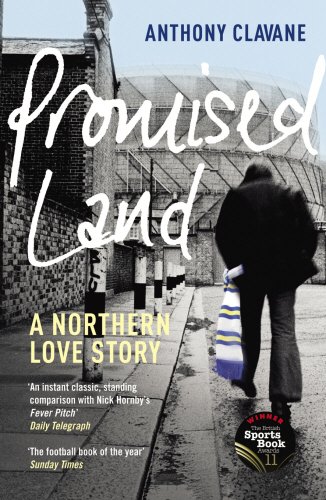
book_coverThe Football Scholars Forum’s last session of 2017 took place on December 7.

Author and journalist Anthony Clavane discussed his splendid book, Promised Land: A Northern Love Story, which won the 2011 UK Sports Book of the Year award.

Part memoir, part social history, part fútbology, Promised Land is as much about Leeds (the city) as it is about Leeds United (the club).  In the publisher’s words: “This is a book about football. It’s about unconditional love for a club, even when it doesn’t always seem to love you back. But it is also a book about much more than that.”

The FSF discussion revolved around the themes of belonging, community, and identity. Football cannot be adequately understood, Clavane’s work shows, without thinking deeply about the social, economic, political, and cultural underpinnings of sport. Leeds and United lent themselves quite well to this kind of analysis, as they embodied broader transformations in English football and society.

Listen to an audio recording of the session here and read live tweets here.

The Football Scholars Forum’s next online gathering takes place on February 23, 2018 (2pm ET). It will explore documentary film as a medium for stories about soccer. For additional information and to participate, click here.

Categories
Video

No Puskas for Oscar


Sport has gifted humankind with many unforgettable moments. “The Rumble in the Jungle” showed that tactical ingenuity, not only brawn had a place in boxing. Roger Milla dancing at a corner flag after yet another goal in the 1990 World Cup signaled African football’s arrival on the world stage. The drive and determination of Queen Serena’s reign will inspire many generations to come.

The 2016/17 PSL season in South Africa doesn’t usually make it on to the “greatest moments in sports” list. But perhaps it should. It gave us an unusual finalist for the 2017 FIFA goal of the year, also known as the Puskas Award.

Oscar Masuluke’s remarkable acrobatic overhead kick goal for Baroka FC against Orlando Pirates in an ABSA Premiership match was an act of pure athletic genius. The context in which it was scored underscores just how extraordinary it was. Baroka FC are relative newcomers to the PSL and hail from the backwaters of the Limpopo province, while Orlando Pirates are the fabled team from the big city.

2017 should have been a festive year for the legendary Pirates as the club celebrated its 80th birthday. It’s been a chequered eight decades of existence for The Mighty Bucs, punctuated by a pioneering spirit, legendary players, historic triumphs, and constant coaching changes. The great team of 1973, which swept all before them, was guided by two different coaches. When Pirates won the African Champions League in 1995, the hot seat was exchanged between Mike Makaab, Joe Frickleton, and the late Ronald Mkhandawire. The double- and treble-plundering sides of 2010/11 and 2011/12 had three different coaches steering the Buccaneers’ ship.

When Pirates faced Baroka on October 31, 2016, they were led by their 6th coach in six years. Pirates had taken the lead in the 48th minute through Justice Chabalala. As the game progressed, the Bucs seemed content to defend a one-goal lead.

Six minutes into stoppage time, Baroka won a corner kick and Masuluke, the lanky Boroka keeper, frantically sprinted forward for a last throw of the dice. Jackson Mabokgwane, the hapless Pirates keeper parried the ball away and it sailed over Masuluke’s head.

The danger seemingly cleared. But the football gods had other ideas. Masuluke executed a perfect bicycle kick, and the ball looped into the top right corner of the Pirates goal.

It was a moment of wonder that has eternally engraved its place in South African sports folklore. Goals like this are as common as Halley’s Comet, hence its nomination for the FIFA Puskas Award. In the end, Olivier Giroud’s “scorpion kick” goal for Arsenal denied Masuluke the honor of becoming the first goalkeeper to win the goal of the year award.

If sport is art, as CLR James famously wrote, then beauty is in the eye of the beholder.

Categories
Players

South African Soccer NGO in the Spotlight

uvf12

Kabelo “KB” Mashinini, Thabiso “Boyzzz” Khumalo and Thabang “Cosmos” Matsoko are the heart and soul of the Umhlaba Vision Foundation (UVF) in South Africa. In a recent piece published in the Huffington Post, the three men discuss their nonprofit organization that since 2007 has provided local boys with overseas educational experiences through soccer.

“Hailing from the Meadowlands section of Soweto, Mashinini, Khumalo and Matsoko have impacted their community and country significantly over the last decade,” the article states.  “What we’re doing,” says Michigan-based Khumalo, “is bringing talented student-athletes here to go to school and then when they do good in soccer and in school, they get two opportunities.”

“Because most of these kids are like me, where I only depended on soccer, and if soccer didn’t work, I hadn’t considered what else I’d do,” Khumalo said, “I decided to create the foundation to help the kids of South Africa and make my contribution to society using something I love and am passionate about.”

UVF has important Michigan connections through Khumalo and sponsors such as Madonna University Athletics, AFC Ann Arbor, Concordia Ann Arbor Athletics, Northville Rush, and Michigan ODP.

Read the full article here.

Categories
Fútbology

Sport and Social Justice in South Africa

SANROC_32-130-1624-84-Tennis Protest_Page_1


Nelson Mandela would have been proud of Colin Kaepernick and the black (as well as a few white) U.S. athletes involved in the national anthem demonstrations against police violence and systemic racism. “Sport has the power to change the world,” Mandela believed. “It has the power to inspire. It has the power to unite people in a way that little else does. It speaks to youth in a language they understand. Sport can create hope where once there was only despair.”


This weekend I am presenting a paper that puts some of these issues in historical perspective at the 14th North Eastern Workshop on Southern Africa.


Using a mix of primary and secondary sources, “Sport and Social Justice in South Africa: Historical Reflections” shows how soccer, rugby, cricket and other sports carved out spaces in which to contest white power and raise awareness among athletes, coaches, officials, and fans of the evils of racism. It explores how black (and some white) sportsmen and women, South African and not, over the course of the 20th century worked hard to connect sport to advocacy for equal rights, citizenship, and the reduction (or elimination) of unjust inequalities.


After the rise of apartheid in 1948, a number of sports activists overtly challenged segregation, mainly by launching a global boycott of white South African sport. Sports sanctions, beginning with a FIFA suspension in 1961 and continuing with expulsion from the Olympics in 1970 and eventually from nearly every major sport, propelled the Anti-Apartheid Movement and contributed to the struggle for national liberation.


In the final section, the paper grapples with the impact of the commercialization of sport in the 1980s and 1990s and its changing social and political role during the transition from apartheid to democracy. In doing so, it notes the increasing marginalization of social justice initiatives and discourses in sports. Since the end of the boycott in 1992, the lion’s share of the medals, money, glory, and career opportunities has gone to a few historically advantaged white men and some members of the new black upper-middle class.


For just about everyone else, the pride elicited by Olympic and world champions Caster Semenya and Wayde Van Niekerk sits alongside sport’s fading willingness to meaningfully address inequality and injustice in the age of Jacob Zuma, Marikana, and #FeesMustFall.

Categories
Fútbology

In Soccer and Society, Black Lives Matter

Nearly empty Orlando Stadium, February 15, 2017.
A desolate Orlando Stadium for a PSL fixture, February 15, 2017. Photo by Njabulo Ngidi.


The welfare of South African football used to matter beyond its borders.


In 1974, for example, the Brazilian João Havelange won the FIFA presidency in a fiercely contested election against the conservative English incumbent, Sir Stanley Rous. He canvassed for votes in Africa, Asia and the Americas, sometimes with Pelé in tow. The businessman and former Olympic swimmer promised marginalized FIFA constituencies additional berths in the World Cup finals and greater funding for soccer development programs. Havelange also sided with African activists and the global Anti-Apartheid Movement to keep South Africa out of FIFA. Africa’s delegates reciprocated with their votes and the Brazilian supremo went on to transform FIFA into a massive global business, which he ruled with an iron fist for the next quarter century.


Since readmission to FIFA in 1992, South Africa has won two continental titles at club level and one at senior national team level. Its Premier Soccer League, according to World Soccer magazine, ranks 25th in the world (alongside Scotland). The women’s game has also grown, though significant challenges remain. The country’s successful hosting of the 2010 World Cup symbolized the great advances in South African football, particularly its organizational sophistication and financial resources.


Despite such undeniable progress, local football hardly resonates internationally anymore. In fact, many South African fans and pundits are disillusioned about the state of the domestic game.


Like almost everyone else in the early 1990s, my peers and I were fascinated by the exciting new times ushered in by the demise of apartheid. We were scrawny young boys who, like kids anywhere, lived for the game. We believed readmission into world football ignited the possibility of a future professional playing career. Things worked out differently for us.


On a recent visit to the Lebanon neighborhood of Mabopane, the township of my teenage years, it was disheartening to see how the game was no longer a central part of social life in the community in which I grew up. The dusty fields where we contested many epic duels are covered with shrubs. Those pitches that are still in playable condition are occupied by charismatic churches, which are flourishing in many poor African communities by selling salvation to people in hardship.


Grassroots football, at its best, can serve as a bulwark for a wide range of social ills that thrive where recreational resources, human and material, are scant. Any community with “redundant youth” who have lots of free time is a recipe for disaster. No wonder Mabopane and other townships on the outskirts of Pretoria are at the epicentre of the nyaope street drug epidemic  ravaging South Africa today.


The grassroots game has more players and coaches than the formal game administered by the South African Football Association. Even though informal football is neither expensive to play nor to administer, it receives minimal financial investment and is wracked by insecurity and instability. This is why residents of Mabopane, like thousands of fútbol-loving South Africans, take it upon themselves to ensure the vitality of the grassroots game.


Blaming the administrators and corporate sponsors entrusted with the game’s welfare is understandable, but communities can ill-afford to delegate responsibility for social health to people and structures who do not genuinely have their interests at heart. The July 29 tragedy at FNB Stadium, which killed two fans and injured more than a dozen people in a gate crush at the Kaizer Chiefs-Orlando Pirates derby, is a case in point.


The tragedy showed how South African soccer’s leadership struggles with ensuring spectator safety at big matches while continuing to do very little for the development of the sport at the bottom of the the pyramid. Until these fundamental issues are resolved, black families will continue to worry every time their loved ones go to a football match, whether at the neighborhood sandlot or at a World Cup stadium.