Categories
Fútbology

Reading Soccer

FSF_round_logoFor almost a decade I’ve been involved with the Football Scholars Forum, an online book club that TV wordsmith Ray Hudson labeled “the soccer think tank.” An intellectual pick up game of sorts, an informal space to read, reflect, try new things, network, learn, and engage in thoughtful conversations with fútbologists around the world.


This fall, the group met three times. On September 25, Amy Bass, an historian and Emmy-award winning producer, joined us for a discussion of her new book, One Goal: A Coach, a Team, and the Game That Brought a Divided Town Together. This evocative ethnography of Somali immigrants playing for Lewiston (Maine) High School’s Blue Devils provides both a contemporary shapshot of a changing postindustrial northeastern town and a classic sports story, a-la Friday Night Lights. Written for a general audience, One Goal benefits greatly from Bass’s expertise as a scholar of sports and the politics of race in the United States. With xenophobia and intolerance rising nationally and internationally, this book restores some hope that soccer can play a meaningful role in building community.


Sebastian Abbot, a former correspondent for the AP in Pakistan, was our guest on October 17. His (first) book, The Away Game: The Epic Search for Soccer’s Next Superstars, chronicles the “largest talent search in sports history”—the Football Dreams/Aspire Academy organized and lavishly funded by Qatar, the 2022 World Cup host nation, as a “soft power” operation. While many books these days thinly analyze “global football,” The Away Game tangibly connects people in West Africa, the Persian Gulf and Europe in illuminating ways. Scouting, the book shows, is increasingly reliant on science and information technology (big data, AI, etc.), but the attributes that led to the success of Diawandou Diagne, one of Abbot’s subjects from Senegal, “were much harder to spot in a match or training session; his judgment, strength of character, self-discipline, and motivation. These attributes made him a great leader. They also helped him make smart decisions off the field that proved just as important as those on it.”


The third FSF convocation took place on December 13, when we welcomed our University of Michigan colleagues Stefan Szymanski and Silke-Maria Weineck, authors of It’s Football, Not Soccer (and Viceversa). Through text mining of print media, scrutiny of Reddit and similar Internet forums, as well as other sources, the book explores the historical usage of the terms “soccer” and “football” mainly in the United States and Britain. In doing so, it reveals a much more complicated story that commonly assumed. The authors conclude that in a world with American, Australian, Gaelic, and rugby football codes, “soccer is quite a good word; unlike football, it does not create ambiguity.” Whether “soccer” can overcome its recent association with Americanization remains to be seen. Will the 2026 World Cup be a tipping point?


The Football Scholars Forum resumes after the holiday break. The next sessions will feature Todd Cleveland’s Following the Ball: The Migration of African Soccer Players across the Portuguese Colonial Empire (in February) and Rachel Allison’s Kicking Center: Gender and the Selling of Women’s Professional Soccer (March/April).

Categories
Fútbology

Russia 2018: A Fútbologist’s Lament


Prior to this year’s FIFA World Cup, which France won last night in Moscow by defeating Croatia 4-2 in the final, I had never experienced a World Cup without my Italy.

To make matters worse, my secondary teams, USA and South Africa, also did not qualify. What would it be like to follow the most popular global cultural event as a discerning neutral observer?

Early on, the six-goal draw between Spain-Portugal, most memorable because of Cristiano Ronaldo’s hat-trick, and Mexico’s stunning 1-0 upset of Germany jolted me into pretending I was engaged in the tournament. Fox’s insipid coverage in the U.S. did little to heighten my enthusiasm. Nothing changed when I landed in Italy for the remainder of the group stage.

Italians were detached from the World Cup. Media coverage and everyday conversations were more in tune with the Serie A transfer market as well as Scuderia Ferrari’s surging fortunes in Formula 1. From the Umbrian hills to the Lazio coast, tourists and foreigners were usually the only ones I saw glued to the prime-time matches on TVs set up in piazzas and cafés.

The emotional outbursts of a group of vacationing Swedes at an eatery near our house during their rollercoaster match against Germany anticipated by thirty seconds the iPad livestream at our dinner table. That’s how we knew that the 10-man Germans had somehow won before Toni Kroos actually curled that wonderful 95th-minute free kick into the top corner [watch it here].

Senegal—the strongest African team together with Nigeria—came closest to getting me involved on a deeper level. In the build up to Senegal-Colombia, a match the West Africans needed at least to draw to qualify for the knockout stage, I was quoted in a New York Times front-page story about Senegal Coach Aliou Cissé—the lowest paid coach in the World Cup [click here for full article]. I watched that crucial game with two Senegalese street vendors at a beach establishment. When the Video Assistant Referee (the infamous VAR!) reversed a penalty that the referee had initially awarded Senegal, one of the lads calmly turned to me and said in nearly perfect Italian: “That’s no problem because God is on our side.” I did not have the courage to ask him if he still felt that way after Colombia’s late goal eliminated Senegal.

As it turned out, none of the five African teams made it to the second round—a disheartening outcome that I analyzed with Assumpta Oturu, host of KPFK’s “Spotlight Africa” program. We also discussed what changes may help African nations produce better results at future World Cups [listen here (27:08-34:42)].

The single-elimination round of 16 coincided with my return to Fox TV-land. Matches were shown in the late morning and early afternoon, but that was hardly a problem since teaching my global soccer online course absolutely required keeping a close tab on the competition. (Hard life, I know.)

By this time, the only thing mitigating my growing disinterest in Russia 2018 was the presence of so many players of African and Caribbean origin in the France, Belgium, and England squads. Arguably the most acutely insightful writing on World Cup soccer, race, immigration, and national identities appeared on the Africa Is A Country website [here and here] and in an Al Jazeera piece by David Goldblatt [here].

The day before the final I returned to the intersection of sports, culture, and politics in a Voice of America story. On Sunday, as the curtain fell on French celebrations at the Luzhniki Stadium, I headed to my campus office for a live interview with China Global Television Network (see video above) to wrap up my first, and hopefully last, World Cup as a neutral observer.

Categories
Fútbology

Review Essay: African Futebol and Portugal

[Note: This review essay is cross-posted from idrottsforum.org.]

In an extraordinary stroke of good luck, I recently had the opportunity to read Football and Colonialism by Nuno Domingos and Following The Ball by Todd Cleveland. These well-researched scholarly histories of Africans in Portugal’s soccer empire beautifully complement each other.

Book CoverFootball and Colonialism reconstructs the culture of the game in Lourenço Marques (Maputo today). A carefully edited English translation of a previously published Portuguese edition, it tethers sport to urban development and everyday life in a racially segregated city. Government records and press sources provide the bulk of the primary evidence, with oral interviews enriching the chronologically organized narrative. The book’s main objective is to demonstrate that football performances and bodily practices—from techniques and tactics to language use and fan culture—came to form an integral part of the larger colonial history of Mozambique.

Football and Colonialism opens by situating itself in a growing literature on sport and leisure in African history and then outlines the book’s main themes, methodology, and structure. Chapter 2 examines the rise of organized football in the white residential areas of Lourenço Marques, where it aimed to strengthen physical education programs and reinforce white minority rule. Chapter 3 widens its ethnographic lens to incorporate black neighborhoods on the periphery of the expanding city. By the 1940s, the chapter shows, local African men had transformed football into a popular spectacle that shaped, and was shaped by, new forms of sociability and identitarianism. Chapter 4 explores a vernacular football culture defined by trickster dribblers (malabaristas), vigorous tackles (beketela), and hard-core (“diseased”) fans. Moves such as psêtu (making fun of an opponent after dribbling past him) andpyonyo (repeatedly dribbling around the same defender) captured the importance of “malice” in navigating between the Scylla of colonial racism and the Charybdis of material poverty (pp. 116, 119). Chapter 5 opens a parenthesis on the occult world of the vovô (religious specialist)—a feature of the African game that blends “traditional” agrarian beliefs and practices with “modern” urban ways and worldviews.

The game’s changing tactics and styles of play are the subject of chapter 6. This brilliant chapter explains how a range of British, Brazilian, Portuguese, and South African influences produced a cosmopolitan brand of Mozambican football inextricably linked to colonial racial hierarchies. As a result, by the late 1950s, the white “downtown” game’s modernity, speed, and efficiency stood in stark contrast to the African suburban game’s enduring preference for risk taking tactics and crowd-pleasing dribbling moves. Chapter 7 discusses the desegregation of the white league (AFLM) in the 1960s and describes how major Portuguese sides developed “feeder” clubs in Lourenço Marques to recruit exciting African talents, including Eusébio—the first African to win the European Player of the Year. A short concluding chapter underscores the contradiction of football in colonial Mozambique as a social practice that reinforced white minority rule while simultaneously creating a space in which the black majority could express aspirations for belonging, equality, and freedom.

Book CoverFollowing the Ball builds on these valuable insights to explore the experiences in Portugal of migrant footballers originally from Mozambique, Angola, Guinea Bissau, Cape Verde, and São Tomé and Príncipe. Using archival and oral sources, the book argues that Africans abroad were not passive victims of colonial capitalist machinations, but instead found ways to negotiate a better life for themselves on and off the pitch. The first chapter succinctly describes Portuguese rule in Africa and outlines the development of football among white settlers. The next chapter draws on Domingos’s pioneering work to examine the segregated nature of the inter-war soccer in the colonies and then turns to the reforms of the 1950s that brought more mestiços (biracial) and, for the first time, darker-skinned Africans into the ranks of white clubs (much to the detriment of African leagues).

Chapter 3 shifts the narrative into high gear. Through deft use of evocative interviews, it brings out the connections between Africa and Europe. Meticulous attention is paid to both the “push” and “pull” factors that triggered the migration of white, mestiço, and African footballers to clubs in Lisbon and elsewhere in Portugal. Chapter 4 explores the countless difficulties faced by immigrant players. “We suffered a lot due to the weather and food,” Hilário recalled (p. 121) an example of how saudade (melancholy and longing for home) affected the young men. The much more competitive quality of football challenged them too, as did the prohibition on signing for clubs outside Portugal and the Salazar dictatorship’s repression.

Chapter 5 focuses on the 1960s and early 1970s and the ways in which African migrants coped with a number of sporting, social, and political obstacles. “The social bonds that African footballers cultivated and deepened,” Cleveland notes, “served to mitigate their saudades, while also lifting their spirits and helping them adjust to metropolitan life” (p. 154). In the context of rising popular protest in Portugal and of militant resistance in the colonies, this acutely insightful chapter brings into sharp relief the role of rebellious students and of Académica de Coimbra FC—“the epicenter of political radicalism” (p. 196). In 1969, for example, Mario Wilson and other Africans joined their Académica teammates in wearing black armbands in a Cup semifinal against Sporting Lisbon to show solidarity with student demonstrations against the regime. While the story ends with independence in 1975, the epilogue makes reference to Eder, a striker born in Guinea Bissau, whose game-winning goal for Portugal in the 2016 Euro final against France (in Paris in extra time) reminds us that “the myriad contributions made by these African players have, indeed, rendered Portugal a very rich nation” (p. 216).

* * *

Following the Ball and Football and Colonialism make important contributions to the fields of Sport Studies and African history. As legitimate academic studies in and of themselves, they convincingly demonstrate that the histories of Mozambican football and of African migrants in Portugal have value and deserve to be told in their own right.  Both books also put multiple African voices and perspectives center stage while delineating the local and international implications of Lusophone African football’s history. In doing so, Following the Ball and Football and Colonialism help to narrow the linguistic and geo-institutional barriers that tend to separate Anglophone, Francophone, and Lusophone scholarship on Africa.

As can be expected, both books have some shortcomings. For example, Domingos’s prose suffers from too many passive verbs and painfully long sentences, and chapters 2 and 3 could have been shorter. More substantively, Football and Colonialism is short on analysis of masculinities and femininities, generational relations, and inner workings of African clubs and leagues. Cleveland’s work, on the other hand, relies so heavily on biographical portraits that it sometimes seems to articulate a theory based on anecdotes. Following the Ball also tends to gloss over cases of less successful African migrants, and treads lightly on the role of fans, club owners, sports reporters, and sponsors in shaping the history of Africans in the Portuguese game.

Despite these limitations, Football and Colonialism and Following the Ball succeed in accomplishing their stated objectives. Individually and together, these impressive books greatly deepen our knowledge and understanding of football and society in Africa and Europe. I highly recommend them to specialists and general readers interested in sport, African Studies, and globalization.
Categories
Fútbology

Teaching Soccer Online: 2018 Edition

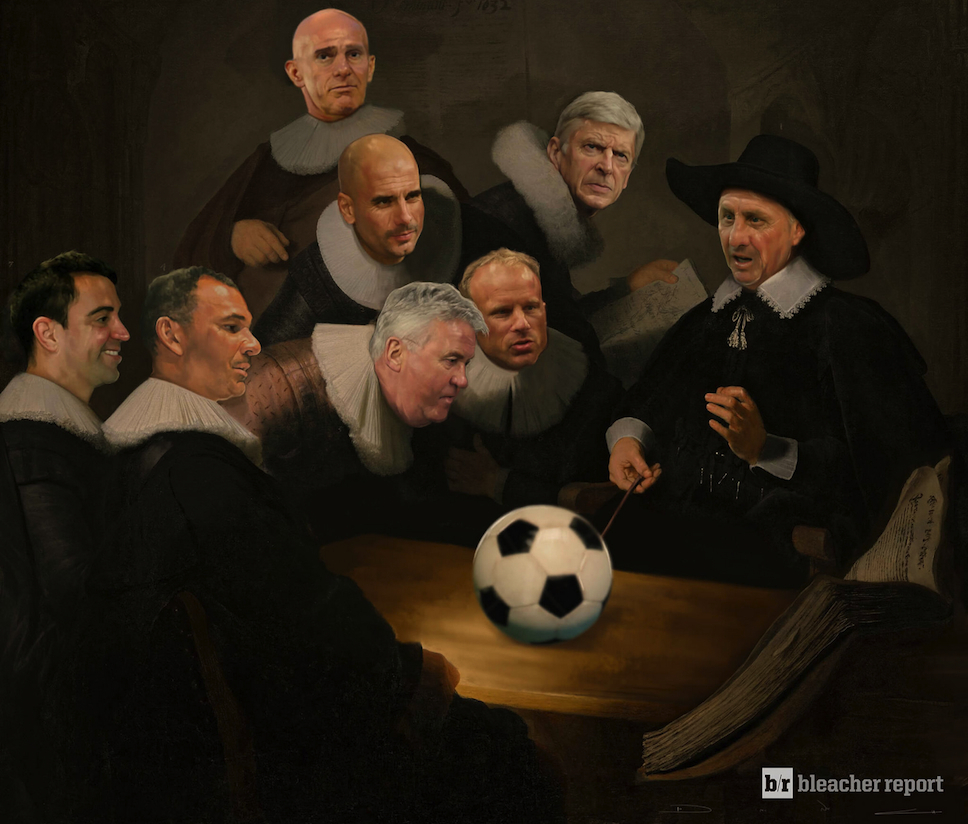
Cruyff_teacher_sm

A couple of weeks ago, I was mired in grading final papers and exams when I received the first student emails about my “Global Soccer” online summer course.

“Professor,” an eager young man wrote, “I’m really excited about taking your soccer class and want to get an early start.” His enthusiasm, while obviously welcome, also raised my anxiety level. He had inadvertently reminded me that the time had come to complete the “drafty” syllabus and to quickly finish marking and submit my final grades.

A few double sessions later, the seven-week introductory course was ready to go. Using Michigan State’s D2L learning management system, students explore the relationship between soccer and social change.

A mix of academic and popular readings, lecture videos, and films take them swiftly across continents. We look at a number of topics and case studies, including: ancient ball games and the rise of association football; fan cultures and stadium disasters; the men’s and women’s game in the U.S.; soccer and politics in Brazil and Argentina; Africa’s role in globalizing the game; and the FIFA World Cup “in sun and shadow” (to borrow from Eduardo Galeano). Special attention is paid to how soccer relates to power, economic interests, and issues of race, ethnicity, class, gender, community, and nation.

When the course kicked off yesterday, enrollment had reached 150. A very healthy number! Thankfully, I have three excellent graduate assistants helping me manage the workload.

My soccer tribe (Desmond Morris docet) is made up of students drawn from 49 different majors. Business majors lead the pack (27% of the total), followed by advertising, kinesiology, human biology, geography, and chemical engineering. Smaller cohorts come from computer science, education, economics, accounting, journalism, electrical engineering, prenursing, psychology, dietetics, and packaging. Finally, there is an intriguingly long list of “lone wolves” from physics, linguistics, studio art, prelaw,  neuroscience, horticulture, and more. In other words, our virtual classroom in many ways resembles a stadium crowd: a broadly representative snapshot of the larger community.

It probably doesn’t hurt enrollment that 2018 is a World Cup year and that I am teaching this course for a sixth consecutive year. Still, the overwhelming majority of students are taking it because they need the 4 General Education credits to satisfy university requirements. It helps to have an unconventional topic and the online format is also appealing. Students away from campus can continue making progress towards a degree while also working summer jobs, traveling, or simply filling time between marathons of Fortnite and FIFA 18 (the best-selling sports video game in the United States).

As an historian, I find it consistently invigorating to venture outside my disciplinary comfort zone and interact with different types of students. It’s an antidote to pedagogical predictability and stagnation and one of the main reasons why I genuinely enjoy teaching General Education classes. Even in summer!

Categories
Fútbology

Documentary Films as Soccer Storytelling

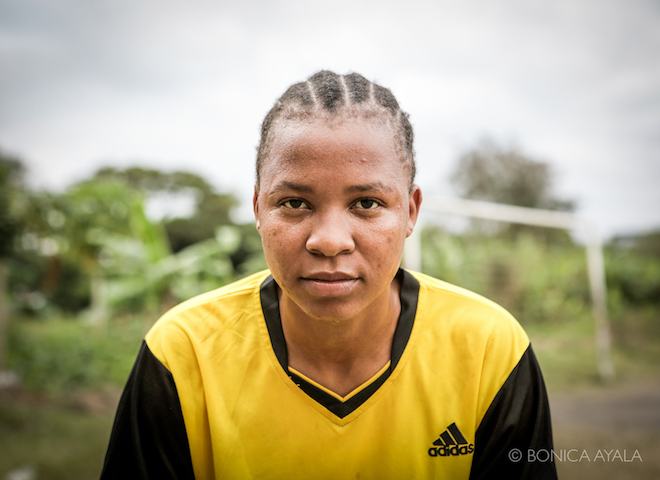
Portrait photo of Ayala (Zanzibari player)
I recently went on a cinematic journey that took me from women’s soccer in Zanzibar to a failed stadium-and-entertainment complex in Buenos Aires.

My travel agency, so to speak, was the Football Scholars Forum. On February 23 it held an online discussion of two low-budget, high-return documentary films. (A recording of the event can be found here. Audio quality improves significantly around the 20 minute mark.)

“New Generation Queens” by Megan Shutzer tells the story of a Zanzibari women’s team. The documentary follows the compelling lives of younger and older women to cast light on the culture of the women’s game on the East African island, which is 99% Muslim. The 50-minute film alternates interviews with passionate players and determined organizers with footage of training sessions on rudimentary pitches. As an historian, I especially liked the remarkable 1988 footage of a Swedish team playing against a local team: the first official women’s game in Zanzibar! After the set up, the film’s main story line becomes the New Generation Queens’ journey to mainland Tanzania for a major tournament. Only the younger players participate in the Under-15 event, an important recruiting venue for the Tanzanian national side. Shaba “Messi” has a lot riding on this competition.

“Ciudad Deportiva—El Documental,” co-produced by Alex Galarza and four Argentine journalists, tells the story of Boca Juniors’ failed attempt in the 1960s and early 1970s to build a 150,000-seat stadium and recreational complex. The 45-minute documentary combines rich archival footage with still photography and interviews, to reconstruct the history of a monumental sports and urban development project. Focusing on Boca Juniors, one of the most popular clubs in the fútbol-mad city (cf. River Plate, Velez, San Lorenzo, among others), and their influential, albeit dodgy president, Alberto Armando, “Ciudad Deportiva” uncovers multiple and complex links between soccer, politics, and urban history in the mega-city of Buenos Aires.

The two enterprising film makers bring impressive academic credentials to their projects. Galarza has a PhD in Latin American History from Michigan State (where I had the distinct pleasure of serving on his doctoral committee), and is currently a Postdoctoral Fellow at Haverford College. Shutzer has a BA from Harvard, did graduate work at Stanford, is fluent in kiSwahili and works in development.

At the Football Scholars Forum, the pair explained the genealogy of their (first) films, narrative choices and production techniques, as well as approaches to film distribution. Notably, Galarza and Shutzer emphasized their commitment to collaborating closely with local people in the filmmaking process. Both spent years doing fieldwork in Buenos Aires and Zanzibar: nurturing relationships, listening to their interlocutors, building trust, and, of course, playing soccer.

The numerous differences between the films make them intriguingly complementary. “Ciudad” is a historical tale told in Spanish by men (though a female narrator) linked to one of the world’s most famous football clubs. “New Generation Queens” is a contemporary story that centers Swahili women’s voices and experiences located at the distant periphery of the global game.

I highly recommend both films. In a glut of English-language soccer media content, these documentaries stand out for their originality and production value. I also intend to use them in my classroom to challenge stereotypes about Muslim African women and to raise questions about the politics of stadium development, past and present.

Categories
Fútbology

The Promised Land of Leeds

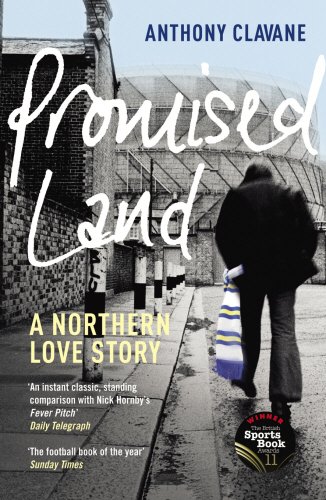
book_coverThe Football Scholars Forum’s last session of 2017 took place on December 7.

Author and journalist Anthony Clavane discussed his splendid book, Promised Land: A Northern Love Story, which won the 2011 UK Sports Book of the Year award.

Part memoir, part social history, part fútbology, Promised Land is as much about Leeds (the city) as it is about Leeds United (the club).  In the publisher’s words: “This is a book about football. It’s about unconditional love for a club, even when it doesn’t always seem to love you back. But it is also a book about much more than that.”

The FSF discussion revolved around the themes of belonging, community, and identity. Football cannot be adequately understood, Clavane’s work shows, without thinking deeply about the social, economic, political, and cultural underpinnings of sport. Leeds and United lent themselves quite well to this kind of analysis, as they embodied broader transformations in English football and society.

Listen to an audio recording of the session here and read live tweets here.

The Football Scholars Forum’s next online gathering takes place on February 23, 2018 (2pm ET). It will explore documentary film as a medium for stories about soccer. For additional information and to participate, click here.

Categories
Fútbology

Sport and Social Justice in South Africa

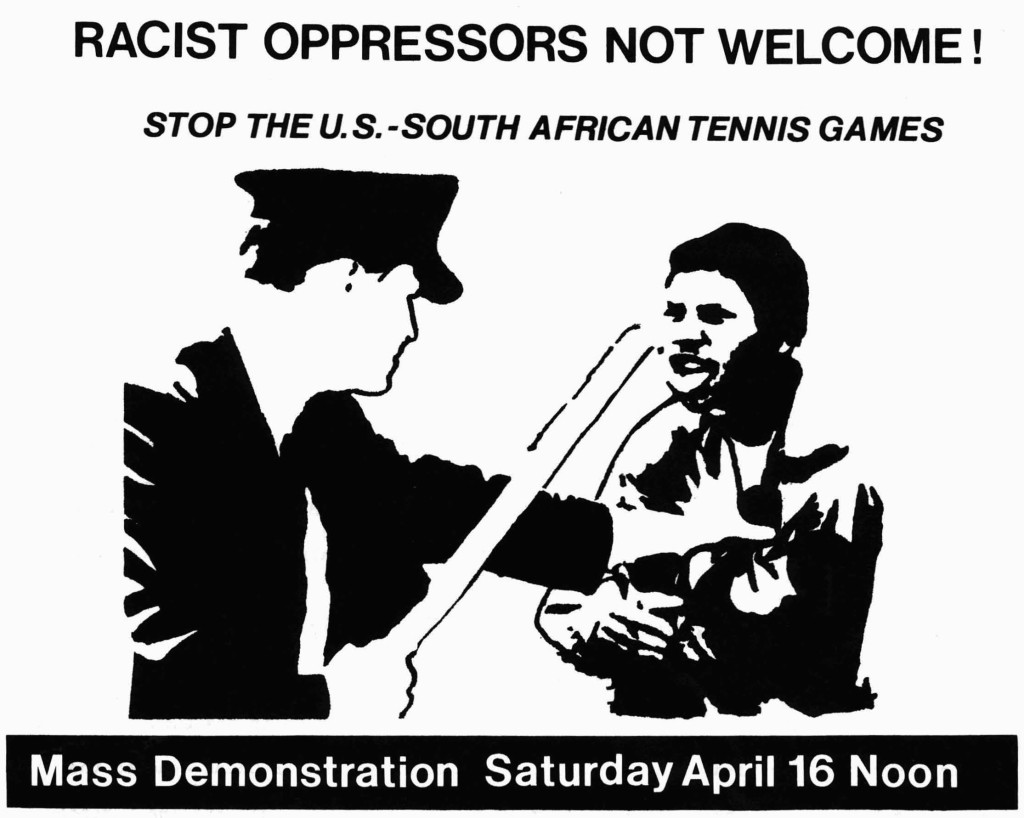
SANROC_32-130-1624-84-Tennis Protest_Page_1


Nelson Mandela would have been proud of Colin Kaepernick and the black (as well as a few white) U.S. athletes involved in the national anthem demonstrations against police violence and systemic racism. “Sport has the power to change the world,” Mandela believed. “It has the power to inspire. It has the power to unite people in a way that little else does. It speaks to youth in a language they understand. Sport can create hope where once there was only despair.”


This weekend I am presenting a paper that puts some of these issues in historical perspective at the 14th North Eastern Workshop on Southern Africa.


Using a mix of primary and secondary sources, “Sport and Social Justice in South Africa: Historical Reflections” shows how soccer, rugby, cricket and other sports carved out spaces in which to contest white power and raise awareness among athletes, coaches, officials, and fans of the evils of racism. It explores how black (and some white) sportsmen and women, South African and not, over the course of the 20th century worked hard to connect sport to advocacy for equal rights, citizenship, and the reduction (or elimination) of unjust inequalities.


After the rise of apartheid in 1948, a number of sports activists overtly challenged segregation, mainly by launching a global boycott of white South African sport. Sports sanctions, beginning with a FIFA suspension in 1961 and continuing with expulsion from the Olympics in 1970 and eventually from nearly every major sport, propelled the Anti-Apartheid Movement and contributed to the struggle for national liberation.


In the final section, the paper grapples with the impact of the commercialization of sport in the 1980s and 1990s and its changing social and political role during the transition from apartheid to democracy. In doing so, it notes the increasing marginalization of social justice initiatives and discourses in sports. Since the end of the boycott in 1992, the lion’s share of the medals, money, glory, and career opportunities has gone to a few historically advantaged white men and some members of the new black upper-middle class.


For just about everyone else, the pride elicited by Olympic and world champions Caster Semenya and Wayde Van Niekerk sits alongside sport’s fading willingness to meaningfully address inequality and injustice in the age of Jacob Zuma, Marikana, and #FeesMustFall.