Barcelona, 5 July 1982: Paolo Rossi had just headed in an Antonio Cabrini cross to put us up 1-0 against Brazil in the last game of the second group stage of the 1982 World Cup. My friend Fabio and I, football-obsessed youngsters, sat wide-eyed on the floor of an impossibly crowded living room in a relative’s home outside Pesaro, in the hills of the Marche region of Italy. A few days before we had been part of a spontaneous street carnival with tens of thousands of fellow Romans celebrating our victory against Maradona’s Argentina. Rossi’s goal suddenly made a miracle possible: beat Brazil and earn a place in the semifinals.
Five minutes later, a Brazilian Doctor made an incision that surgically removed the optimism of hope. Socrates, we knew from watching Corinthians games on Teleroma 56 (a local station), had a penchant for embarrassing defenders with graceful pivots on the ball and elegant heel passes. To say nothing of goalkeepers humiliated by his swerving free kicks and shots from impossible angles.
That hot July afternoon on the pitch of Español’s Sarria Stadium, Socrates received the ball in midfield, carried, dished it off to Zico and continued his run forward. With the outside of his right foot, Zico quickly sliced a delightful pass to a streaking Socrates in the box. Socrates took a simple touch and appeared to be running out of room on the right side of the 6-yard box. Where most players would square the ball back into the middle of the box for a teammate to run on and strike at goal, Socrates instead took a precise near-post shot that faked Dino Zoff out of his shorts: 1-1. No! He didn’t just do that?! Watch it here. (Italy went on to win the game 3-2 and the World Cup.)
After the 1982 tournament, Corinthians traded Socrates to Fiorentina so we got to appreciate the fullness of this grandiose footballer for many years. Even Juve fans like me, whose contempt for La Viola is unrestrained, became fond of “Tacco d’Oro” — the Golden Heel — the tall, lanky, bearded midfielder with the long curly hair who added so much spectacle to Serie A in the age of Maradona, Platini, and Falcao.
A decade later, I found myself still learning from Socrates but in a completely different context. While teaching one of the first undergraduate courses on soccer ever taught in an American university, my students and I discussed Socrates’s role in Corinthians Democracy, a movement that helped propel democratic change in Brazil in the early 1980s. How many professional athletes would threaten to retire, as Socrates did in 1982, if a conservative businessman were to take the reins of a popular team?
So it was with profound sadness that I learned of Socrates’s passing at the age of 57. The official cause of death was “septic shock from an intestinal infection” according to a São Paulo hospital statement. Like Garrincha, Brazil’s most loved footballer, Socrates was an alcoholic. The rum-like cachaça had become his vital fluid. As Socrates candidly put it in an interview: “This country drinks more cachaça than any other in the world, and it seems like I myself drink it all.” We all battle our demons.
As the South Africans say, “Hamba kahle” brother Socrates. Your love of the game and commitment to social justice will never be forgotten.
Juan Manuel Olivera scores the winner for Al Wasl against Al Ain in the UAE league. Al Wasl’s head coach, Diego Armando Maradona, must be pleased to see his lessons translated into magical “golatos.”
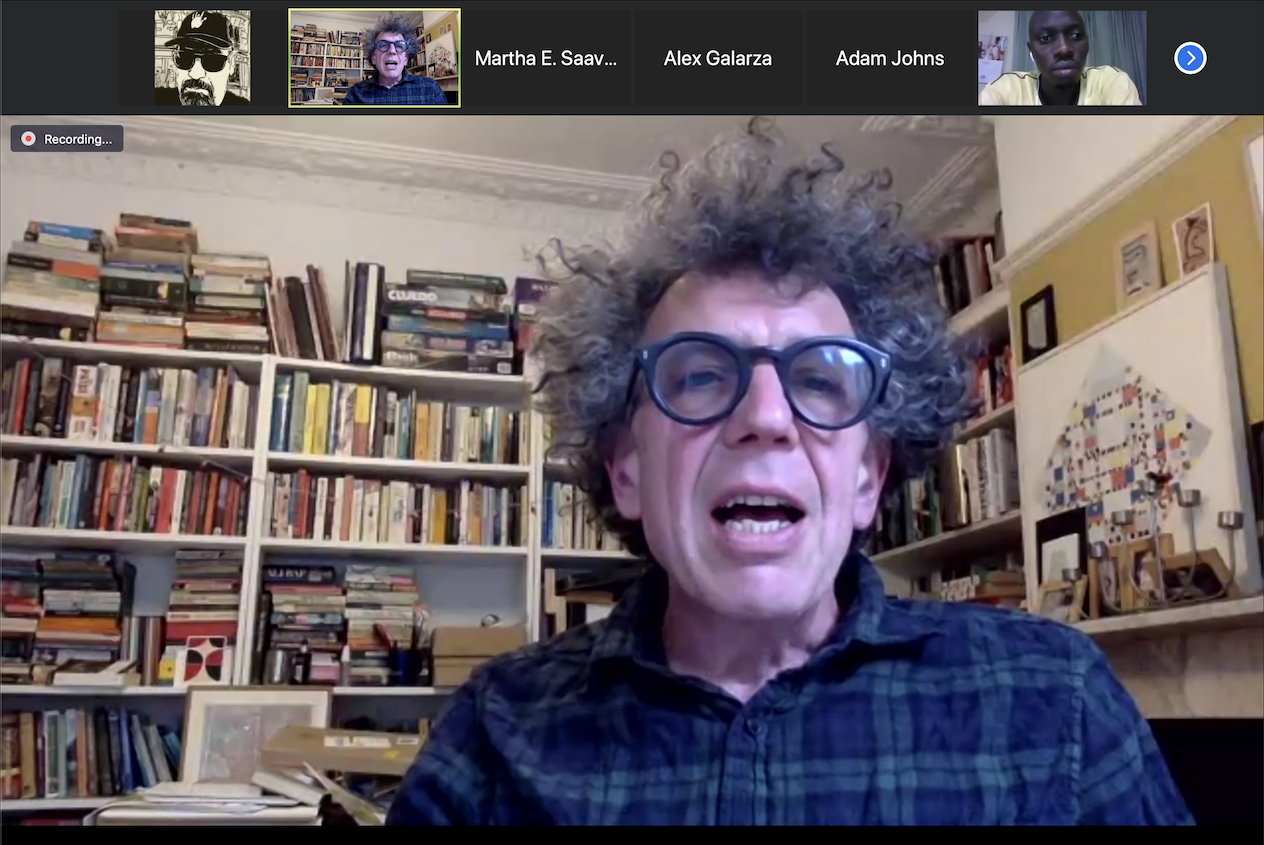
The Football Scholars Forum — an online community of scholars that discusses serious fútbol scholarship — convenes on Wednesday, November 9, at 2pm EST (-5 GMT) for a session on “Soccer in the Classroom.”
Several scholars will make short presentations about university football courses in various disciplines in the humanities and social sciences. Course syllabi have been pre-circulated on the website.
Among the questions to be discussed: How can teaching a course or unit on soccer expand or contribute to disciplinary knowledge? What are the challenges and opportunities of teaching a fútbol class filled with everyone from fantasy soccer geeks to soccer neophytes? How can students apply what they learn in a football course outside the classroom? Interested participants can join the conversation via Skype by contacting Alex Galarza.
In related news, FSF is to be featured in a poster session at HASTAC 2011, a conference on digital scholarly communication at the University of Michigan in December.
The 1990 World Cup hosted by Italy is often remembered for the exploits of Cameroon’s Indomitable Lions. Led by 38-year-old striker Roger Milla, Cameroon legitimized African football on the global stage with their 1-0 victory over Maradona’s Argentina in the opening game and then becoming the first African team to reach the World Cup quarterfinals. In 1994, Bea Vidacs, a Hungarian anthropologist based in the United States, landed in Yaoundé to begin her research on football and identity in Cameroon. Visions of a Better World: Football in the Cameroonian Social Imagination is a revised version of a doctoral thesis completed in 2002, a study that over the years midwifed several very good journal articles and chapters in scholarly collections.
In Making History, a BBC Radio 4 series exploring ordinary people’s links with the past, we learn about the first African team to play in Europe. Making History listener Eryl Freestone has a memoir written by her grandfather which describes a tour of black South African footballers that he helped organize in 1899, just as the South African War was about to start. Eryl meets with Chris Bolsmann at Aston University who has been researching the tour and was desperate to find an ancestor of WM Williams’ – Ery’s grandfather.
Manchester United – Manchester City 1-6. Mario Balotelli and David Silva lead Roberto Mancini’s men to a historic victory at Old Trafford. Does this outrageously humiliating scoreline signal a changing of the guard in English football?
Fluminense’s Fred makes a diagonal run into the box, traps the high vertical cross with his chest, and executes a bicycle kick that sends the ball past the stunned Coritiba keeper and into the back of the net. Pure magic!