Categories
Video

Fruity Finals

brazil-1970

[Charged with breaking down the European qualifiers, David Patrick Lane takes a moment to tell us what he really thinks. Next Group 7. Serbia, France, and yes, our Austrian friends will soon make an appearance.]

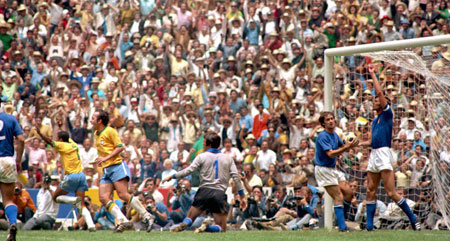
The 1970 World Cup was a watershed moment for the modern game, if for no other reason than it was broadcast in color. Color TV sets were a newfangled invention then, though many folks have continued to watch World Cups as if they were taking place in snowstorms.

There have been 10 World Cups since 1970. That’s 40 different semi finalists. Yet only four have come from outside Europe.

Categories
Video

Players Who Won’t Be Missed in 2010 – Berbatov, Bulgaria

l_37d5e91d61da26d465e0fd6bcc2b17da

Dimitar Berbatov has teased Tottenham and delighted dancing girls.  Now he has finally settled down. Manchester can be so moody in May.  The incumbent is pregnant.  Elena’s black Mercedes already has one of those baby-on-board stickers.  She zips around Sofia like Stoichkov.  Explosive, fast and unpredictable.  Legs right up to her fanny.  Daniela and Tedi are jealous.  Sofia whispers.  It’s the life of a modern footballer.

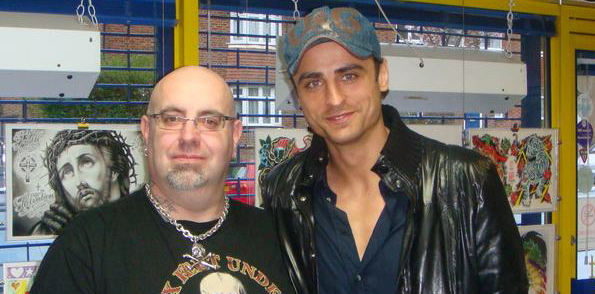
Lal Hardy, his tattoo artist in North London, swears up and down the No. 9 is a man of impeccable character and standing. UNICEF has bestowed an ambassadorship on the Bulgarian captain.  And Sir Alex seems both pleased and nonplussed at the same time.

Categories
Video

C’mon You Boys in Green – Ireland 2010

robbie-keane-caleb-folan

We continue our look at European qualifiers.  Group 8 next.  (No Georgia in South Africa, their campaign tripped up by two overlapping Russian full backs, Sergei Ossetia and Igor Abkhazia.  Meanwhile, substitute Joe Biden has promised to help Georgia maintain their shape in future fixtures.)

Moving on from Iceland and up the index of heavily indebted and bank bollixed Western European nations, we turn to the Republic of Ireland.

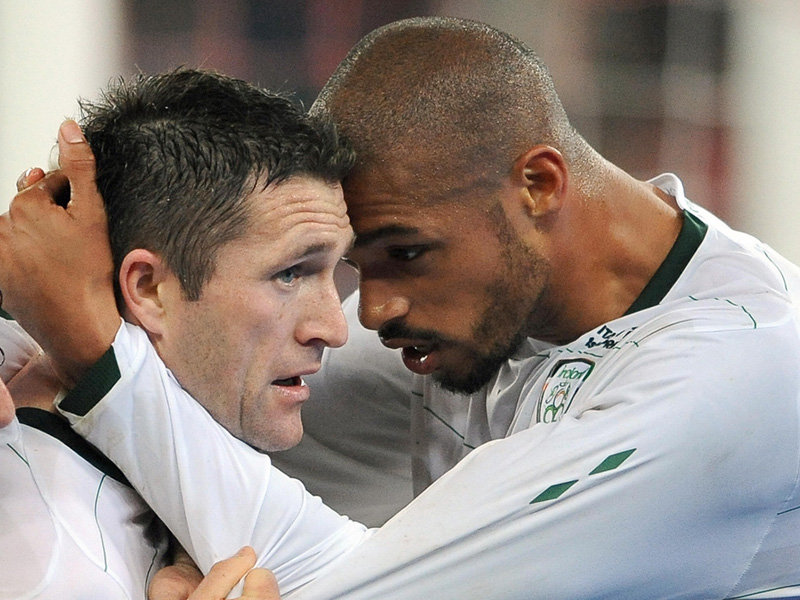
Is there a term in the Gaeltacht for Catenaccio?  Does the Irish captain drink Jammy Donuts?  It seems applying classic football nomenclature or the current cult of celebrity to the Irish team somehow misses the point.

Categories
Hosting

What will happen in South Africa after the World Cup is over?

Christopher Merrett

3198519983_dfa28aaf83

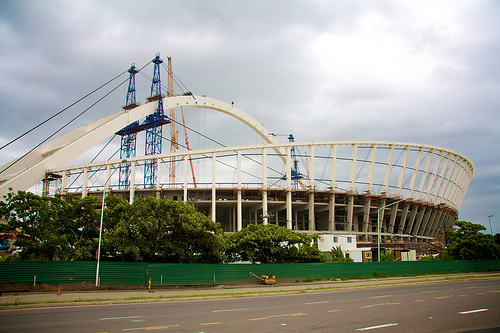
Football is often described as the “beautiful game”. Indeed, it is. As Michael Worsnip pointed out recently (The Witness, June 12), football on the local recreation ground reduces the possibility that young people will be tempted into crime. And, of course, South Africa will host a successful Fifa World Cup next year — if it tries hard enough. All of this is obvious. But what is crucially missing from public debate are a number of awkward political, economic and social questions.

Categories
Hosting

New documentary on 2010 World Cup


Trailer for Fahrenheit 2010 – Warming Up for the World Cup in South Africa on TrailerAddict.

FAHRENHEIT 2010: WARMING UP FOR THE WORLD CUP IN SOUTH AFRICA
directed by Craig Tanner, Australia/South Africa (2009) documentary

The measured Fahrenheit 2010 systematically examines the expectations of a variety of South Africans on the country’s staging of the 2010 FIFA World Cup. Focal points of the film are South Africa’s socio-economic disparities and debate as to whether the erection of state of the art sports arenas will leave the country with white elephants which it can ill afford. Interviewees include Danny Jordaan, Desmond Tutu, Michael Sutcliffe, Jomo Sono, Dennis Brutus and also, amongst others, construction workers, street traders, soccer players and the sangoma with the answer to Bafana Bafana’s woes.

Categories
Hosting

White elephants?

Report in the South African newspaper, The Mercury

THE fate of some of South Africa’s oldest stadiums, including Durban’s
Absa Stadium, is already decided, despite the emotional debate expected
to rage around the continued existence of these venues.

Danny Jordaan, CEO of Fifa’s 2010 Local Organising committee, said at
the African Journalism Awards 2010 media debate in Durban on Friday,
that a decision to demolish the Boet Erasmus stadium in Port Elizabeth
had already been taken and that both Newlands and the Absa stadium in
Durban would share the same fate in time.

Responding to a question on whether the new stadiums would be white
elephants once the World Cup was over, Jordaan said the lifecycle of any
stadium was 50 to 70 years and that Newlands and the Absa stadium were
reaching their sell-by date.

“This is an emotional debate that will go on for a long time, but who,
once they have experienced the new, modern, sophisticated stadiums will
want to go back to the old ones? South Africa has made a bid to host the
Rugby World Cup in 2015 and if we win that, the games will most
certainly be hosted in the new stadiums. If that happened it would
certainly help to move this debate along,” he said.

Sharks rugby CEO Brian van Zyl said the issue hadn’t been raised with him.

“That’s the first I’ve heard of it and it’s absolute nonsense? Jordaan’s
opinion of Absa is subjective. In any case, we have made a promise to
all our stakeholders that before we make any decisions regarding this
stadium we will consult with them through a transparent process. To
date, the indication from many of them is they don’t want to move – I
guess it could be considered an emotive issue, but it’s about a culture.”

Van Zyl said according to clause six of the South African Rugby Union’s
constitution all international rugby matches, including the World Cup,
would be played at rugby venues. “And I don’t think that’s about to change.”

Western Province Rugby Union’s managing director, Rob Wagner, said it
was also the first he had heard of it.

“We own the stadium, there is no debt on it and it’s probably one of the
oldest rugby grounds in the world. It has heritage and tradition, why
would we want to demolish it? I can’t understand how Jordaan could have
said that.”

Categories
Hosting Video

‘South Africa is coming’


ESPN’s Outside the Lines sent its presenter, Bob Ley, to South Africa to report on the preparations for the World Cup. It is an informative, fair piece in stark contrast with the nonsense published in the UK press, including in The Guardian. You can watch the rest of the report at the program’s website (scroll down and look on the right).