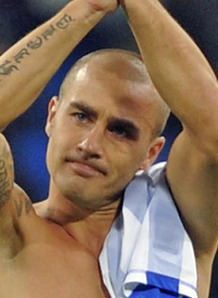
The Old Lady of Italian football was humiliated 0-3 by struggling Udinese this weekend, making it 12 losses and 47 goals against in 32 serie A matches this season. After this latest embarrassment, the formerly powerful and prestigious Juventus FC apologized to millions of fans and began a ‘silenzio stampa’ (no media interviews until further notice).
Yet Marcello Lippi continues to live in an alternate universe and appears ready to go to South Africa with between half and two-thirds of the Azzurri’s starting 11 from Juve’s ranks. Tired pensioners like Cannavaro, Legrottaglie, Camoranesi and Grosso are like a concrete block around Italy’s neck. Unless Lippi has a last-minute change-of-heart, then expect the Azzurri to sink fast come June.
When people ask me ‘Who will win the 2010 World Cup’ I tell them either Spain or England. Loaded with talent in the middle and up front, Spain have been magnificent in the past 3 years, as the Euro 2008 crown and the subsequent winning streak demonstrated. Meanwhile, Capello has resurrected an English side that didn’t even qualify for Euro 2008, mixing tactical acumen with more traditional Anglo attributes and an experienced player corps.
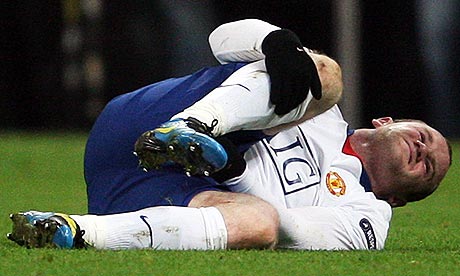
But my World Cup final prediction hangs on Wayne Rooney’s health. His severe ankle sprain suffered in the dying seconds of ManU’s last-gasp defeat to Bayern Munich not only complicates my future career as a pundit (ha!), but threatens the Red Devils’ title chase and England’s quest for World Cup glory.
Categories
The Goal of the Century?
Is Lionel Messi’s second goal (above) of his hat-trick against Real Zaragoza in Spain’s La Liga an early contender for Goal of the Century?
The goal will have to compete with one he scored another Spanish club, Getafe, last year:
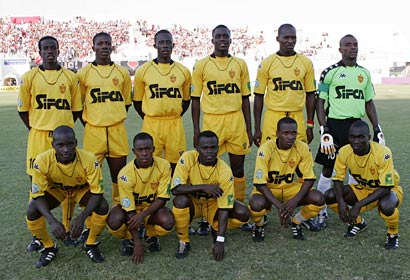
An African club is the first to enter into a formal partnership with the Professional Football Players Observatory in Switzerland. ASEC MIMOSAS of Abidjan (Ivory Coast) — a powerhouse of West Africa and past winner of the CAF Champions League — will work with the PFPO to identify leagues and clubs that offer the best career opportunities for young Ivorians trained at ASEC’s well-known MimoSifcom Academy. According to PFPO, Ivory Coast supplies the largest number of players to Europe’s Big 5 leagues. Is this latest collaboration a mutually beneficial deal or a form of neo-colonialism?
Categories
Talking Football in KwaZulu-Natal
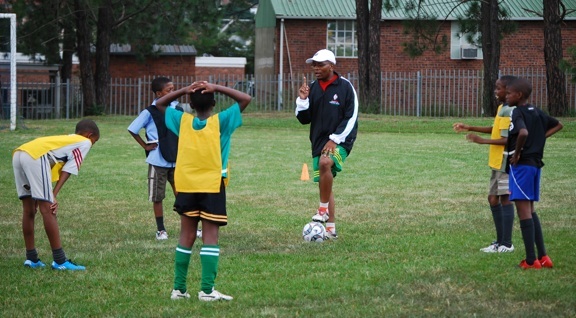
Thabo Dladla is a highly committed youth coach and former professional player with AmaZulu FC. His weekly ‘Talking Football’ column in a Pietermaritzburg newspaper focuses on the game at the grassroots, not on the 2010 World Cup or the PSL. ‘There is something wrong when a country with over 48 million people and a huge football budget cannot produce good players,’ writes Dladla this week.
‘I still believe that our country has some of the best talent at U12 level but poor leadership is letting the youth down. We have too many politicians and sports leaders who are more interested in the benefits that can be gained for themselves, than the sport itself.
‘Post 2010 South African youth deserve better than what they are getting now. The transformation of football should be felt at the lowest of levels. We can no longer allow a situation where a few get fatter while the players continue to suffer.’
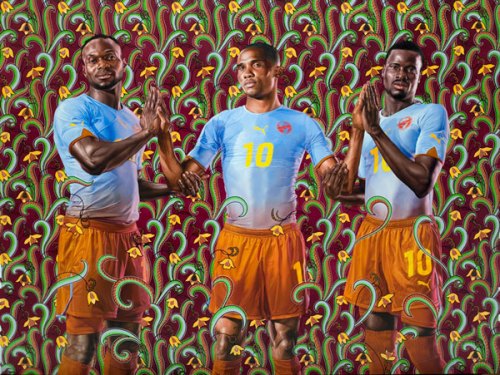
The German shoe and sportswear company, Puma, sponsors at least 12 African national football teams–five of which qualified for the 2010 World Cup. To commemorate the World Cup year (and because it is good PR and to sell shirts), Puma commissioned artist Kehinde Wiley to create four new works of arts inspired by the footbal stars Samuel Eto’o of Cameroon, John Mensah of Ghana and Emmanuel Eboué of Ivory Coast. Wiley painted individual portraits of the players and a fourth painting (above) of the three players “symbolizing the united countries of Africa.” The players are wearing the “Unity” kit, a limited edition uniform designed to be a third kit (apart from home and away kits) shared by all African teams, symbolizing unity.
Here‘s a link to a video of Wiley at work on the project with Mensah, Eboue and Eto’o.
The paintings will be exhibited during the World Cup in South Africa.
Categories
World Cup Tickets: The Saga Continues
FIFA General Secretary Jerome Valcke revealed that tickets prices for South African residents will be slashed to ensure that all World Cup matches will be ‘sold out’. Thousands of Category 2 and 3 tickets will be sold at Category 4 prices — twenty US dollars — although details on sales have not yet been released. This announcement came on the heels of news that FIFA expects to make a marginal loss on the tournament. Valcke placed part of the blame on airlines and travel agencies for overcharging foreign football tourists. In South Africa, however, FIFA’s byzantine ticketing process — heavily reliant on internet-based credit card sales — has been criticized. Others say Bafana Bafana’s mediocrity has not helped and that even the lower ticket prices are beyond the reach of most ordinary South Africans.