Did an interview on the ‘Worldview’ program of Chicago Public Radio station WBEZ. Interviewers Euan Hauge and Dan Shalin asked me what’s happening in SA at the moment? What are people talking about? Is the 2010 World Cup a case of the rich getting richer? What about forced removals disguised as urban renewal and the Nelspruit stadium mess? Is this really Africa’s World Cup? How will the African teams do in the tournament?
Listen to the interview here: http://audio.wbez.org/wv/2010/06/wv_20100604.mp3

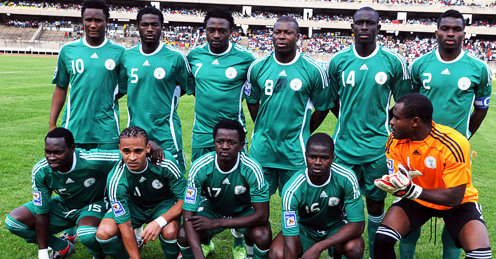
European clubs own more than 80 percent of Africa’s World Cup players. Final squad lists show that 112 of the 138 players are based in Europe and one in Asia (Qatar). Nigeria’s entire team is made up of players competing in nine different European countries!
Let’s break down the rest. Ivory Coast: 22 out of 23 (in 11 European countries); Cameroon: 22 out of 23 (9 countries); Algeria: 20 out of 23 (9 countries); Ghana: 19 out of 23 (9 countries); South Africa: 7 out of 23 (5 countries). The Big 5 leagues — England, Spain, Italy, Germany and France – capture the lion’s share of Africa’s World Cup players, 70 percent to be precise.
South Africa represents an anomaly due to its well-endowed Premier Soccer League, ranked in the Top 10 of the world’s richest leagues. If we were to take South Africa’s team members out of the equation, then 93 percent of Africans in this year’s World Cup are based in overseas clubs. And five of the nine players still playing club football in Africa are goalkeepers.
‘After the flight of brains Africa is confronted with the muscle exodus,’ noted Issa Hayatou, President of CAF. ‘The rich countries import the raw material — talent — and they often send to the continent their less valuable technicians. The inequality of the exchange terms is indisputable. It creates a situation of dependence and the impoverishment of some clubs . . . and of national championships.’ Paradoxically, the more African superstars like Drogba shine in Europe’s elite leagues, the more likely everyday football on African soil will suffer.
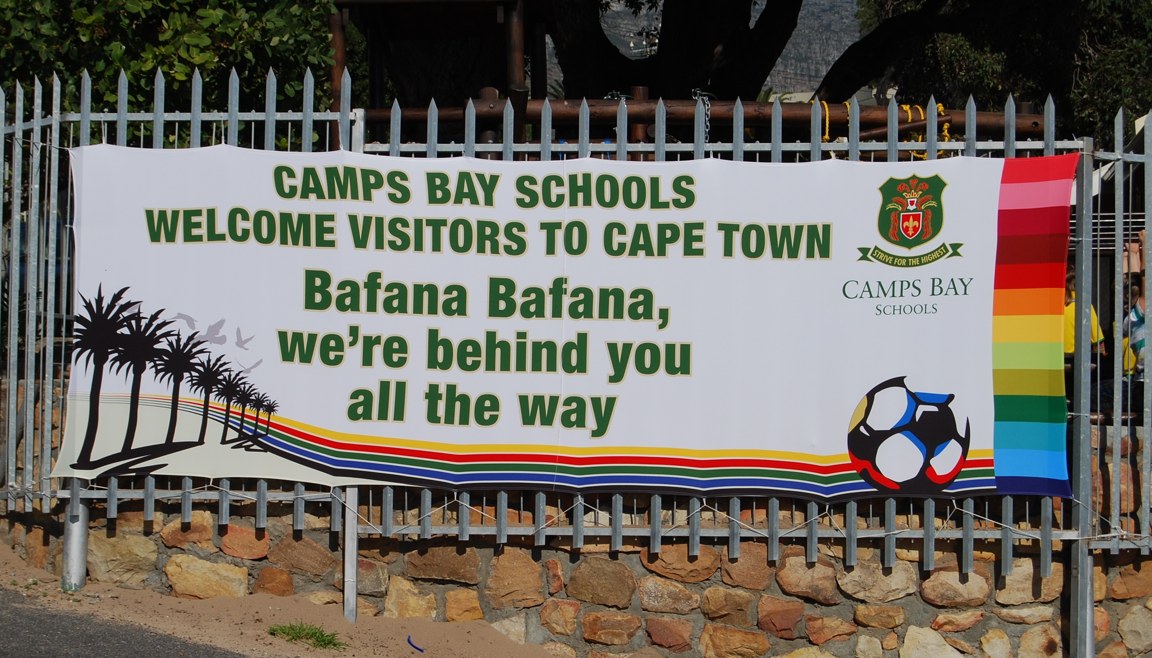
Disguised as the Duke of Edinburgh I ducked through security at Cape Town’s No. 1 Radio Station, 94.5 K-FM, for an audience with Benito. Benito is the man responsible for caffeinating Cape Town’s morning airwaves. What did Benito think of Bafana Bafana’s chances?
Uruguayan Ultras Descend on Cape Town II
Tauriq, a classic Cape Town coffee and football connoisseur, shares his reaction to the announcement of the Bafana Bafana squad this morning. In brief, Josephs and Walters edge out Fernandez for the goalkeeping positions. Booth is in. McCarthy is out. And no room for “The Scooter”. Take it away, Tauriq…
I found Tauriq manifesting at Java Lounge at 39 Kloof Street, home of the tightest expresso and the most compassionate and merciful cappuccino you will find anywhere in Cape Town (and the best place to get your wireless action between games).
Everyone in Cape Town has a favourite player. But what about Bafana’s team chemistry? I posed the question to a Cape Town chemist.
Hopefully the World Cup will shine the light on South Africa’s rich football history. Like the story of of Simon “Bull” Lehoko, a star defender of the 1970s and 1980s with Vaal Professionals and Kaizer’s Chiefs. In this video profile by journalist Leoni Marinovich (for the Twenty Ten project), Lehoko talks about the annual “multi-racial matches”–specifically the 1981 edition–arranged between the White XI and African XI as a sign of political “reform.” It was all politically dubious and some of the white players were often openly racist, but the players enjoyed these match ups. And saw in them what could have been. So did some white football fans.