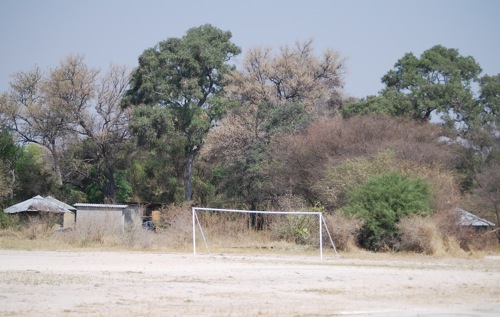
Football pitch at Khwai, northern Botswana (Photo by Peter Alegi)
Even in the world’s largest inland delta — the Okavango delta in Botswana — people play the beautiful game. It was Independence Day (30 September) when I took this photo of the pitch at the relatively inaccessible Khwai village. Wearing their new Drogba and Essien jerseys, my daughters unsuccessfully tried to convince a hippo grazing on the riverbank outside the village to take up position between the goalposts. Maybe he was an Arsenal supporter.
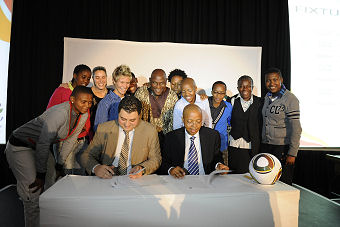
The draw for the 2010 African Women’s Championship was held yesterday at the Birchwood Hotel in Ekurhuleni, east of Johannesburg. The official schedule released by CAF and SAFA reveals that matches will take place at Daveyton’s Sinaba Stadium and Tembisa’s Makhulong Stadium from 31 October to 14 November 2010. However, it remains unclear where each match is taking place and what the kickoff times are.
South African media covered the draw in perfunctory fashion. Local officials repeated platitudes heard daily during the 2010 World Cup: the tournament will market Brand South Africa, foster unity and pride, and so on. ‘This is yet another opportunity to put South Africa and Africa on the global map,’ said Ekhuruleni councillor Ndosi Shongwe in a typical remark. ‘We will be calling all our people to rally behind Banyana Banyana in the same way we did for Bafana Bafana during the 2010 FIFA World Cup. Bafana united us as a nation, now let’s allow the Women’s National Team to take over the baton. To us this is more than just winning the trophy; it is about uniting the country towards social cohesion,’ Shongwe added.
The bigger and more important question, however, is: what will be the impact of this tournament on the development and growth of South African (and African) women’s football at junior, amateur, and elite levels?
This is a crucial question given that the number of female players — mostly black — continues to grow alongside their ongoing marginalization and exclusion in a male-dominated football world. (Suggested reading: Prishani Naidoo and Zanele Muhoi, ‘Women’s bodies and the world of football in South Africa,’ in Ashwin Desai’s The Race to Transform: Sport in Post-Apartheid South Africa (free download here)
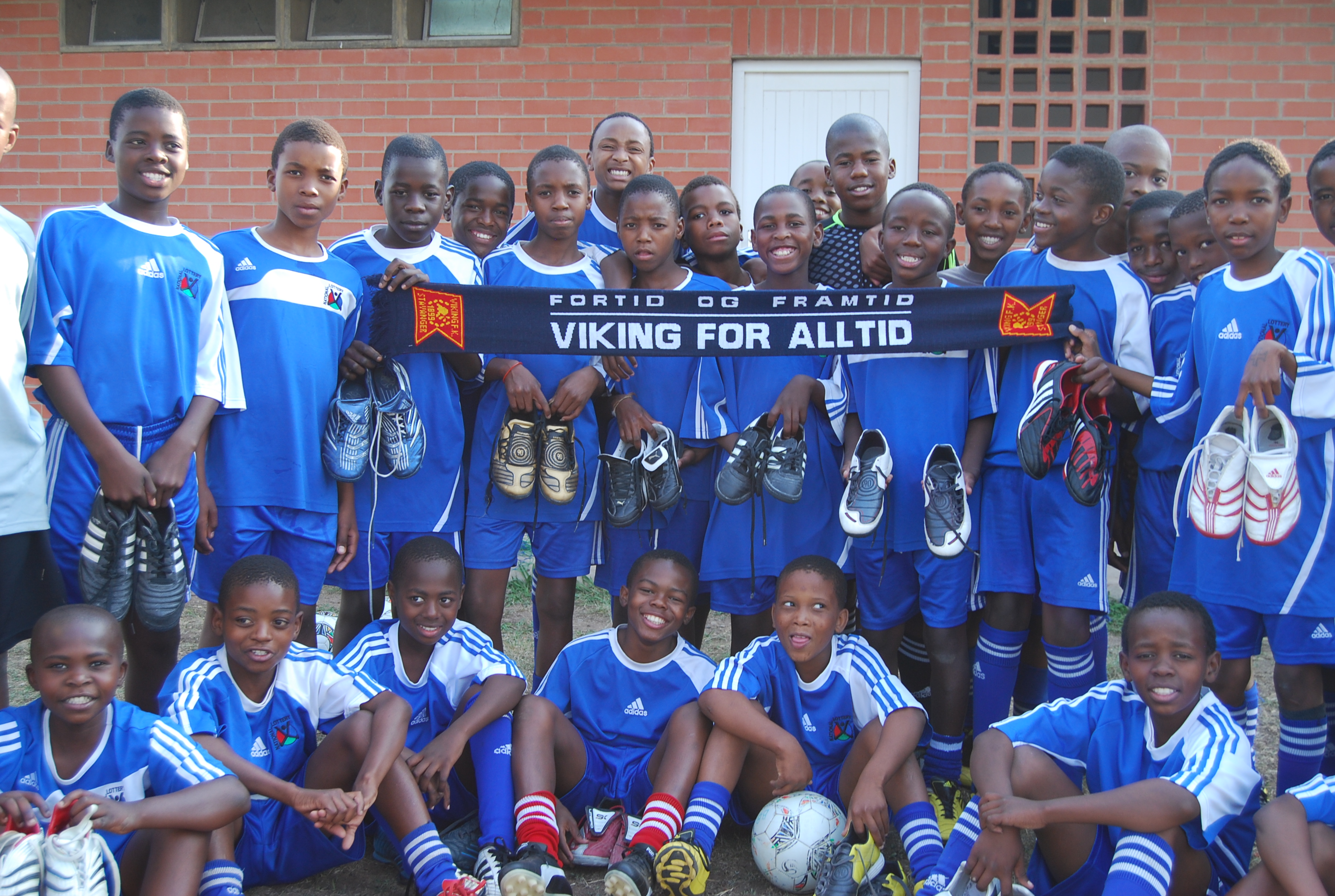
Izichwe thanks Viking Stavanger FC (Photo by Peter Alegi)
From black high-cut steel-toe boots with leather studs to light, laceless pink boots with titanium studs, the history of football shoes is a journey from pain to pleasure.
Outside Europe and North America, however, millions of young players from working poor families cannot experience that special feeling of slipping on a fine pair of ‘real’ football boots. That is why this week’s generous gift of high quality boots from Viking Stavanger FC in Norway brought such joy to the boys of the Izichwe Youth Football program in Pietermaritzburg, KwaZulu-Natal.
Izichwe has also been invited to Norway for a major international tournament in May 2011. The solidarity of Viking (est. 1899) is doing a lot to open up opportunities for this terrific group of young South Africans.
CAF announced that the final draw for the 2010 African Women’s Championship in South Africa will take place in Ekurhuleni (Gauteng) on 21 September. The tournament runs from 29 October to 14 November, with Equatorial Guinea (defending champions), Cameroon, Nigeria, Ghana, Algeria, Mali, Tanzania and hosts South Africa to be divided into two round-robin groups. The top two teams from each group advance to the semis.
But with barely a month to go we are still in the dark about where and when matches will take place. This inexcusable delay makes it more difficult for fans and media to participate in and cover the premier event in women’s football on the continent.
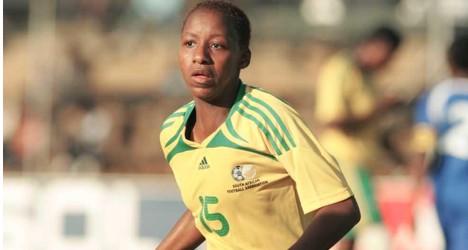
Meanwhile, South Africa’s women’s team, Banyana Banyana, lost 0-2 at home to Cameroon in its last match. Mail and Guardian blogger Siphiwe Hlongwane characterized it as ‘another painful reminder of how far behind we still are when it comes to the women’s game.’ Commenting on South Africa’s humiliating 10-1 loss to Germany in the Women’s Under 17 World Cup, my good friend Thabo Dladla noted in his column today: ‘You cannot have a national U17 team while girls are not playing football in primary school.’
Whether it’s properly hosting a major tournament, building competitive national teams, or developing youth football, for meaningful change to happen, as Hlongwane says, ‘Women’s football needs to be treated with respect.’
Day 4 of the Rhodes Politics Department’s Teach-In on the 2010 World Cup featured three speakers representing social movements critical of the global spectacle. In the video, Ashraf Cassiem of the Western Cape Anti-Eviction Campaign talks about an alternative tournament that took place alongside the FIFA gig: The Poor People’s World Cup. Check it out.
The third lecture in the annual Teach-In, this year entitled ‘After the Thrill has Gone: Reflections on the 2010 FIFA World Cup’, took place on Wednesday this week. Foregoing Res food, an exuberant crowd gathered to hear Peter Alegi talk about the historical phases of the beautiful game in an African context, giving a broader significance to South Africa’s hosting of the 2010 World Cup.
The Chappas from Central Maputo to Estadio Machava takes half an hour and costs the same as a loaf of bread. There were no barricades in Maputo on Sunday. All roads led to the Futebol.
It was difficult to detect the unease of recent days as expectant supporters cracked open bottles of “Doshem”, ripped into tetra pak cartons of cheap red wine and exchanged predictions. This was not a day for the usual colonial replica shirt. No Benfica. No Porto. No Sporting. You had to be wearing the Mambas red, and you especially meant business if your scarf or shirt was wrapped around your head.
My mini bus was bursting as it passed the monumental Mac Mahon brewery, home of the 2M, the “Doshem”. City blocks gave way to cabbage fields. Palm trees waved in the distance. It could have been a scene from “The Thin Red Line” were it not for the sight of four floodlight pylons. We were now immersed in a red sea of supporters, not even Moses could part, but the Chappas found a way.
What was it the man said, “Porque Goshem de futebol”. He forgot to add they also like their chicken. The barnyard creature was being crucified overroaring charcoal fires in fields all around the stadium. Coolers crammed with cervejas provided perfect pre match company. The women of Mozambique certainly understood the business of football.