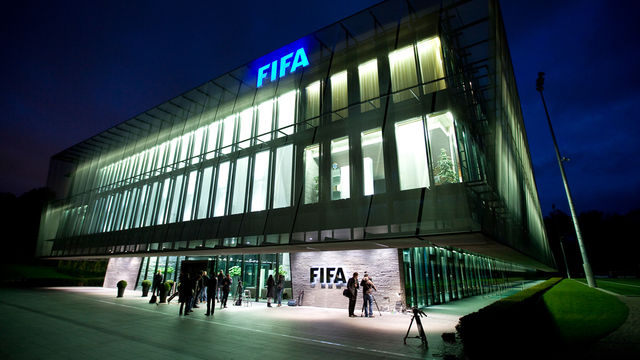
FIFA’s newest corruption scandal and Blatter’s tragicomic re-election make David Goldblatt’s BBC radio documentary a must-listen. The author of The Ball is Round asks what is FIFA? Where has it come from and who is it for? Goldblatt hears from those who have documented FIFA’s story and its secrets and from those who have helped to shape its modern identity.
Click here to listen.
Categories
The Mighty Bucs Reign Supreme
By Mohlomi Maubane in Soweto, South Africa
A few days before the 2010 World Cup kicked off in South Africa, the New York Times Magazine published an insightful piece on football development focused on Ajax Amsterdam’s famous youth academy. “How a Soccer Star is Made” by Michael Sokolove is a must read for the myopic beings who masquerade as the game’s sole custodians in South Africa and who have turned fiddling while Rome burns into an art. I was reminded of the NYT article during this past weekend’s dramatic finish of the 2010-2011 PSL season.
In the story, Sokolove recounts his encounter with David Endt, manager of the Ajax first team and a former Ajax player. Endt also serves as the team’s unofficial conscience and historian. His office is a mini-museum and on his desk was a pair of scissors, once allegedly used by an Ajax player to attack a teammate in a dressing room squabble a few decades back.
If Orlando Pirates — the Soweto giants crowned PSL champions on Saturday — had a museum, the orange shirt of one of Ajax’s most decorated products would find a place in it. For months, Pirates’ coach Ruud Krol’s bright shirt has been the source of jokes among many soccer scribes in South Africa. However, for Krol, who played 339 games for Ajax and 83 times for The Netherlands (including two World Cup finals), the orange shirt was no laughing matter. Not only is orange his national colour, but it was also a good luck omen. And you sure need a dose of good luck to stay at the helm of the Mighty Bucs.
The last two times Pirates were crowned league champions, the victorious coaches were fired early in the following season. A manager can win the league at Pirates, but if the side is deemed not to be suitably entertaining then he will “part ways with the team amicably.” For all its fascination with the English game, the South African football fraternity has not learned some important lessons from it.
Alex Ferguson has been to these shores three times with his Red Devils in the past twenty years. In that same period, Pirates have employed over thirty head coaches, none serving longer than Krol’s three years. Needless to say, the constant chopping and changing had a negative effect on the team’s performance. Success has come in dribs and drabs, and when the 2010-2011 season started, Pirates had not won a major tournament in eight years.
That ghost was laid to rest in October 2010 as Pirates annexed the MTN 8. At Pirates, however, winning a trophy is a double-edged sword. It does offer some reprieve, but it also heightens expectations. And so when Krol guided the Mighty Bucs to the Telkom Cup final only to lose brutally 3-1 to bitter Soweto rivals Kaizer Chiefs, his head was on the chopping block. In fact, Krol’s head has been on the block every time a point was dropped. But in retrospect, that Telkom Cup derby was the turning point in the Pirates’ season.
In a May 23 radio interview, Krol revealed that at the first training session after the loss to Chiefs in December, he called his players around and told them that, painful as it was, that was not the last loss they were going to suffer in their careers. And anyway, the season was far from over, what was important was how they were going to finish at the end of the season. The team duly heeded his call and went on a sixteen-game unbeaten spree, with Krol egging them on from the sidelines reliably clad in his lucky orange shirt.
With five league matches left to play, Pirates Nation prematurely predicted that “We are going to win the league,” despite several other teams being in the title chase. A 3-0 drubbing by Ajax Cape Town — a club founded in 1999 as a joint venture between Ajax Amsterdam and a South African group — ended the Bucs’ unbeaten run on March 16 . Suddenly, being crowned champions did not look like a foregone conclusion. Pirates won the next two games so that with three games left four teams — Pirates, Chiefs, Ajax, and Sundowns — had a chance to win the league. This was no time to blink.
But Pirates blinked. They lost 1-0 to Supersport at home, and needed a 92nd minute equalizer to draw 1-1 away at Santos. On the final day of the season, the team’s destiny was not in their hands. A win against Maritzburg United at home would hand Ajax Cape Town their first league title. If Ajax drew and Pirates won, however, Pirates would be the champions on goal difference. There was also the small matter of a so-called dark horse in the form of Kaizer Chiefs, arithmetically still in the running.
Despite my initial boycott of PSL games due to the cover charge being doubled at the beginning of the season, I have regularly attended Pirates’ games at Orlando Stadium this season. However, I could not conjure up the courage to go to the stadium for the deciding match this past Saturday for fear of having my heart broken into a million pieces. Too painful to imagine.
But somehow, someway, Ajax failed to muster a win. They led 1-0 at the break, only for Maritzburg to claw their way back finding an equalizer and, lo and behold, taking the lead midway through the second half. Meanwhile in Soweto, Golden Arrows were holding Pirates to a 1-1 draw. Then, in the 84th minute, Isaac Chansa let rip from outside the box with a scorcher of a goal. At Cape Town Stadium, three minutes later, Ajax drew level. One more goal and Ajax would win the title.
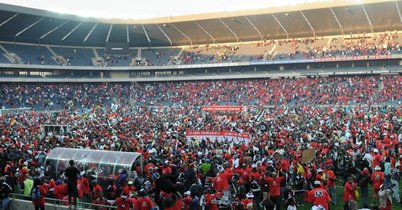
It was not to be. Ezimnyama Ngenkani held on and were crowned champions in the most dramatic fashion since the PSL began in 1996-97. When the referee blew the final whistle at Orlando Stadium, he signaled the start of wild celebrations. Thousands of Buccaneer supporters ran onto the pitch to mob Krol. The Dutch coach may not know that supporters mobbed many of his predecessors in years gone by, usually after an undesired result when the messages being passed on were nothing like the pearls of affection lavished on Krol on Saturday.
South Africa in general, and its football fraternity in particular, should learn from Krol’s sojourn at Pirates. As famed playwright Athol Fugard recently reiterated, we pay scant respect to growth: “Everything must be instant — instant sex, instant coffee, instant satisfaction. Nobody is prepared to plant a seed and wait.” There are no short cuts to success. Let’s plant seeds, nurture them, and let them grow. It’s the only recipe for long-term success, and it is the lesson we must learn from Krol’s success with Pirates.
And that orange shirt, which was missing two buttons after the melee at Orlando Stadium, must be framed and hung in the office of the Orlando Pirates Chairman. Football, bloody hell!!
Unbelievable finish! Ajax CT needed to win at Cape Town Stadium against lowly Maritzburg United, but only managed a 2-2 draw. Meanwhile Orlando Pirates took care of business at Orlando Stadium, beating Golden Arrows 2-1 thanks to an 84th-minute goal by substitute Isaac Chansa. The video captures the excitement in Soweto. We can only imagine the despair in Cape Town.
Categories
Hamba Kahle Glenn Cowley
Glenn Cowley, a giant in the South African publishing industry, died after a short illness in Johannesburg. As Publisher at University of KwaZulu-Natal Press for eleven years until his retirement in 2009, Glenn developed the Press into what BooksLive called “an academic publishing powerhouse in Africa.”
Glenn’s inspiration, vision, and courage also transformed UKZN Press into arguably the leading publisher of sport history books in Africa. He was a trailblazer in recognizing how football and cricket were important topics of scholarly inquiry in their own right. Glenn also understood better than most that athletic contests have long influenced, and been influenced by, social, political, and economic factors. He passionately supported those of us who connected football and cricket with the broader quest for human rights and civil rights in South Africa. The books listed below are a testament to the ways in which Glenn helped to advance the democratization of South African history and culture:
Blacks in Whites: A Century of Cricket Struggles in KwaZulu-Natal by Ashwin Desai, Vishnu Padayachee, Krish Reddy, and Vahed, Goolam (2002)
Caught Behind: Race and Politics in Springbok Cricket by Bruce Murray and Christopher Merrett (2004)
Sport, Space and Segregation: Politics and Society in Pietermaritzburg by Christopher Merrett (2009)
Laduma! Soccer, Politics and Society in South Africa, from its Origins to 2010 by Peter Alegi (2010; first edition 2004)
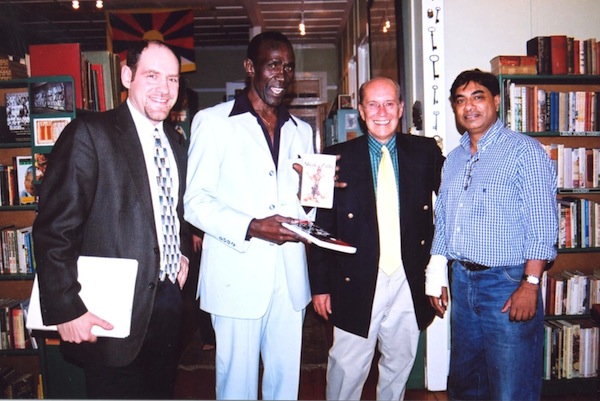
Glenn’s wisdom, sense of humor, generosity, and relentless pursuit of the goodness in/of life was memorable. The photo at the top of this post was taken at my book launch at Ike’s Bookshop in Durban in May 2004, just a few days before FIFA awarded South Africa the 2010 World Cup hosting rights. Glenn is beaming next to Henry “Black Cat” Cele — the former goalkeeper who played King Shaka in the 1980s Shaka Zulu mini-series. That image captures him at his best: happily surrounded by books and people. Hamba kahle Glenn.
Click here for a tribute to Glenn by Books LIVE.
Categories
Football is Freedom
Thirty years on. No one said it better. “Football is Freedom.”
An investigative report by the Mediapart website revealed that numerous managers of the National Technical Directorate (DTN) and the French Football Federation (FFF) approved the “principle of discriminatory quotas” in November 2010. Their objective? To limit the number of players of West African and North African origin.
According to Mediapart, Laurent Blanc — manager of Les Bleus — would have played an active role in those discussions. It is alleged that Blanc highlighted the problem of players who spend three years in training in France and later go abroad to wear other teams’ jerseys. “Something like that cannot not create problems, it applies to the Latin Americans as well,” said Philippe Tournon, press officer of the national team.
At the heart of the problem, the report claims, is growing dissatisfaction among French managers, coaches, and administrators about players who are trained in France, develop into potential national team stars, and who then instead choose — for whatever reason — to represent another country thanks to their double citizenship. “The fact is, there is a large presence of bi-national players at the junior level,” said Fernand Duchaussoy, FFF President, “and some of them later do not want to be part of the national French team.” FIFA rules allow a player with double citizenship to play for a junior national team in one country and still go on to play for another country’s senior national team.
In response to the uproar that followed these revelations, Sports Minister Chantal Jouanno suspended FFF technical director Francois Blaquart, the author of a “quota chart” published on Thursday (May 5) by Mediapart. The explosive issue of racial quotas in French football is embedded in wider debates about immigration, race, and national identity in contemporary France. As Laurent Dubois puts it in Soccer Empire: The World Cup and the Future of France, “When a team takes to the field, the fans say, ‘They are us, and we are them.’ But sometimes that can also force a question: ‘Who are they? And who are we?'”
Categories
Eddie Lewis Passes Away
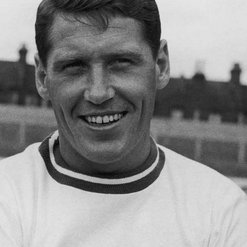
South African football mourns the death of Eddie Lewis. He died of cancer on May 2 in Johannesburg at the age of 76. The Englishman played for Manchester United, Preston North End, West Ham and Leyton Orient (1952-1963) before arriving in South Africa in 1970. Lewis coached Wits University — a white team — to a famous 3-2 victory over Soweto giants Kaizer Chiefs in the 1978 Mainstay Cup final. He later coached Chiefs, Moroka Swallows, and other historically black sides.
Full story here.