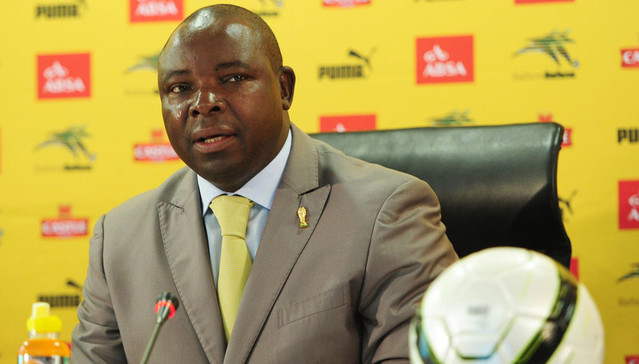
 These are interesting times for politics and football in South Africa. The African National Congress is meeting this week in Bloemfontein/Mangaung to select the ruling party’s new leaders while 94-year-old Nelson Mandela is still hospitalized recovering from surgery and a lung infection. Domestic football has been rocked by a FIFA match fixing report alleging that a transnational match-fixing syndicate based in Singapore, assisted by South African Football Association (SAFA) officials, fixed Bafana Bafana’s friendlies against Thailand, Bulgaria, Colombia and Guatemala in the build up to the 2010 World Cup. Five SAFA men, including its president, Kirsten Nematandani (in photo above), have been suspended pending “further examination” of possible “criminal intent in collusion” with a front organization set up by the convicted match fixer Wilson Raj Perumal.
Consumed by the details of this latest sporting malfeasance as well as the tensions in ANC politics at a particularly difficult moment for South Africa, I was stunned to belatedly learn of the death of Sedick Isaacs at the age of 72. I had the extraordinary privilege to meet him in 2010 while a Fulbright Scholar at the University of KwaZulu-Natal (UKZN). I was humbled and honored to share the stage with Isaacs in a symposium on football history held on the UKZN Westville campus and sponsored by the German cultural exchange program, DAAD.
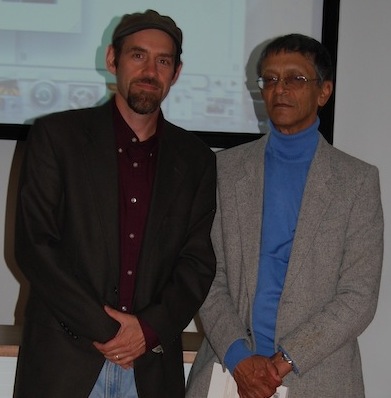
Isaacs spoke matter-of-factly about the cruelty and hardships endured during his 13 years on Robben Island. What had earned him a place in apartheid’s most notorious prison had been his role as saboteur in the armed struggle. Standing before us wearing a blue sweater in the humidity of sub-tropical Durban, Isaacs pointed out that his years on Robben Island had left him always feeling cold regardless of the temperature. A point he reiterated in Cape Town two weeks later when he spoke at my book launch for African Soccerscapes. (That’s us in the photo below.)
By studying and playing on Robben Island, Isaacs told us, prisoners formed and maintained communities of survival and resistance. He earned a university degree while behind bars and also helped to build and administer the prisoners’ Makana Football Association. (The story is admirably told by Chuck Korr and Marvin Close in More Than Just a Game: Football v Apartheid.) When the prisoners finally secured the warden’s approval for their league after three years of struggle, Isaacs ended up handling much of the day-to-day operations of the Makana FA.
 Dr. Isaacs explained that the weekly cycle of matches proved crucial in fighting “eventless time” — a debilitating condition for prisoners serving lengthy sentences. The cycle worked something like this: teams started the week by analyzing the previous match and then by midweek there was growing anticipation for upcoming matches. Conversations, banter, and meetings stoked the hype and created heroes and personalities. By the weekend, excitement surrounding the matches reached fever pitch. Football’s importance, Isaacs said, was enhanced by its force as a provider of human emotions in an emotionally neutral context.
Isaacs pointed out that the only positive effects of long prison sentences is that they can strengthen prisoners’ organizational skills and improve their understanding of human nature. The activities of the Makana FA reinforced this outcome. Intriguingly, both candidates for the ANC presidency in 2012, South African President Jacob Zuma and his challenger Kgalema Motlanthe, played football on Robben Island. “If it had not been for the beautiful game and these community building devices,” Isaacs concluded, “we could have become psychological and physical wrecks incapable of integration into a multicultural world, let alone be able to contribute positively to it.” May you rest in peace Sedick Isaacs. An exemplary South African who can teach folks in Mangaung and at SAFA a few lessons about doing the right thing in politics and football.
Tag: African Soccerscapes

I shared my reflections on the 2010 World Cup (thru June 27) with Alan Minsky, host of The People’s Game — a KPFK/Pacifica Radio project that provides some of the best on-the-field analysis combined with discussions of the political, economic, and cultural subtexts of the 2010 World Cup.
Click here to listen to the interview.
Melissa Block of NPR’s ‘All Things Considered’ interviewed me about soccer’s long history in Africa. Soccer was brought to Africa by British colonials in the mid-1800s. The first documented game on the continent was played in South Africa in 1862, a year before soccer’s official rules were codified. As I argue in African Soccerscapes, soccer has been an important sport in Africa for as long as it was played in Europe.
Click here to listen to the interview and read a transcript.
Was also interviewed by and quoted in this New York Times article: Soccer Returns to its Roots in Africa
This weekend football authors Simon Kuper and David Goldblatt published the kind of book reviews that warm an author’s heart.
“Nobody understands the background to African soccer better than the Italian-American historian Peter Alegi,” writes Kuper in the Financial Times. “This World Cup is his moment. His African Soccerscapes crams daunting erudition, gleaned over many years of study of African football, into under 200 pages of history.” Click here to read Kuper’s review.
In The Observer, Goldblatt wrote: “Peter Alegi’s African Soccerscapes is simply the best available overview of the history” of the game on the continent. Click here to read Goldblatt’s review.
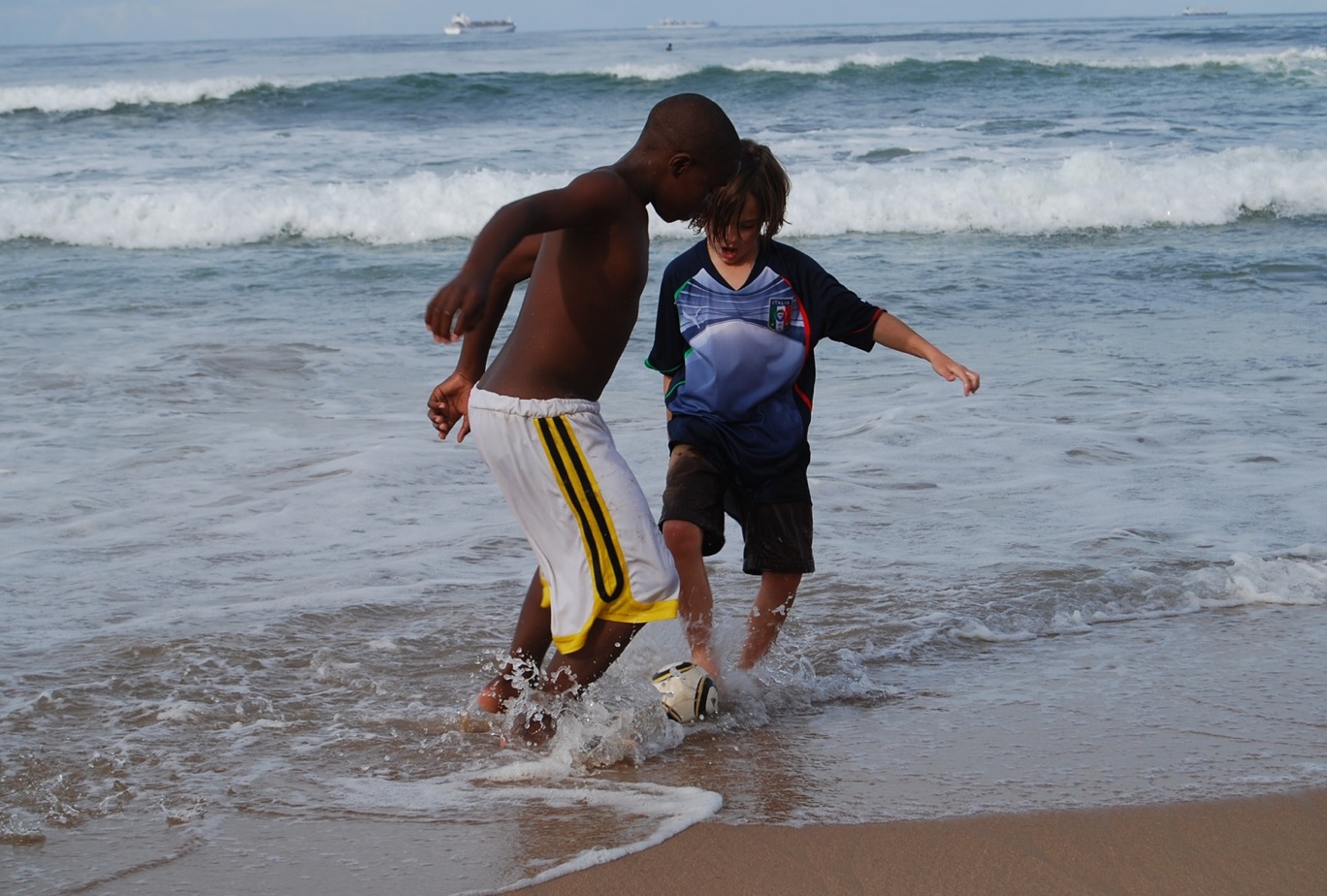
Given the good news, today seemed like a perfect day to go to Durban, pick up our World Cup tix and spend the afternoon playing beach football.
Categories
African Soccerscapes Launched in SA
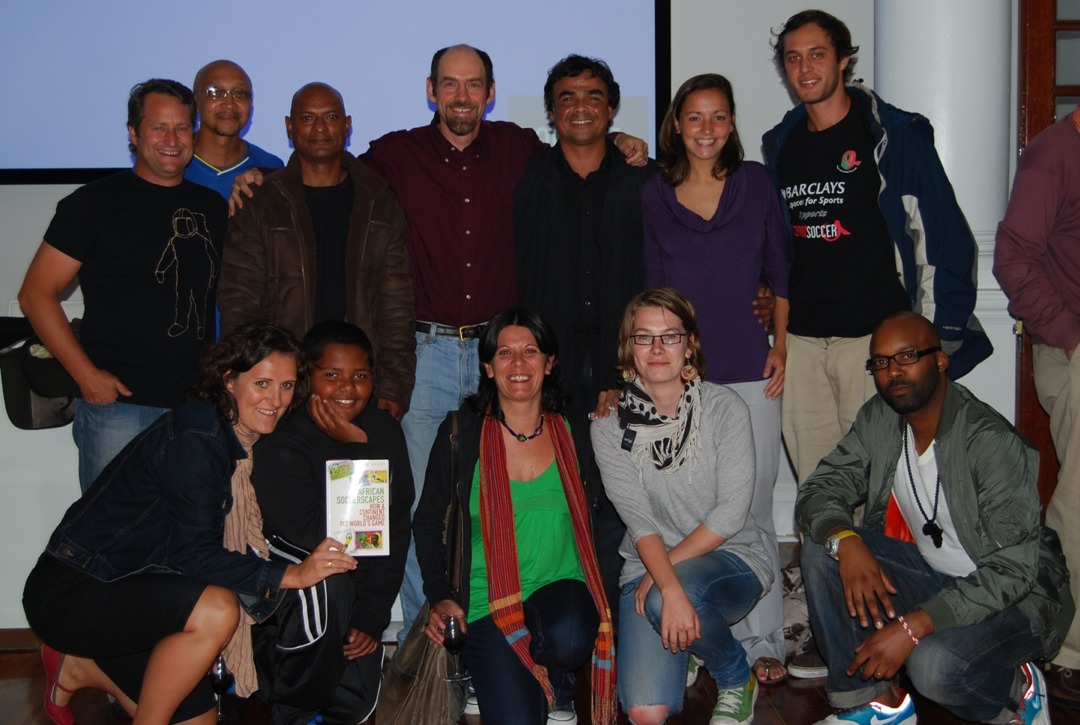
What a great ride! Launched my book African Soccerscapes: How a Continent Changed the World’s Game in Joburg, Cape Town (in photo), and Durban over the past week and a half. Met so many amazing people from all walks of life and broke bread with old friends. The quality of the discussions was very high, with deep engagement on history, culture, politics and everything in between. Was extraordinarily privileged to have Sedick Isaacs of the Robben Island Makana Football Association as a guest of honor in Cape Town and the US Consul General, Jill Derderian, in attendance in Durban.
Been doing lots of press interviews, including one with the New York Times. Made TV appearances on SABC 2’s Weekend Live (thanks Lebo!) and CBC News too. Now that the blog is back up (finally!), I look forward to more thinking with my feet from African soil. Phambili!
Categories
New Book: African Soccerscapes
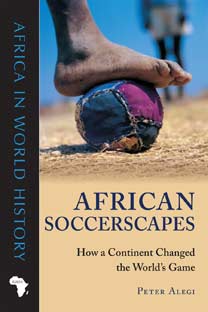 Released ahead of the 2010 World Cup in South Africa, my new book African Soccerscapes tells the little-known story of football in Africa. Published by Ohio University Press in North America and Hurst & Co. in Europe and Africa, the book is both a history and an examination of the connections between sport and society. Using case studies from around the continent, I show how Africans appropriated soccer from Europeans and turned it into a distinctively African activity during the twentieth century.
African players, fans, and officials challenged colonial power and expressed a commitment to racial equality and self-determination. In postcolonial times, new nations staged matches in national stadiums as part of their independence celebrations and joined FIFA. The Confédération Africaine de Football democratized the global game through antiapartheid sanctions and increased the number of African teams in the World Cup finals.
African Soccerscapes analyzes the causes and effects of the departure of huge numbers of African players to overseas clubs and the dominance of commercial interests in local leagues. Finally, a consideration of the growth of women’s soccer and South Africa’s hosting of the 2010 World Cup challenges the one-dimensional notion of Africa as a backward, “tribal” continent populated by victims of war, corruption, famine, and disease.
Look for stories from African Soccerscapes on this blog, as well as news and updates about book events, talks, media coverage and more.